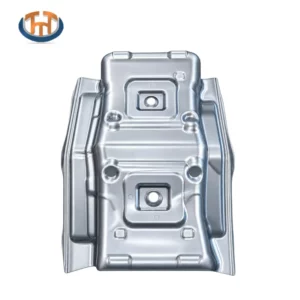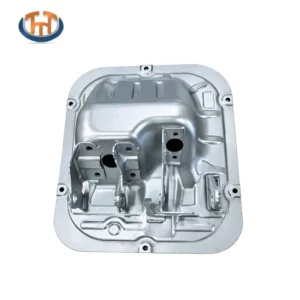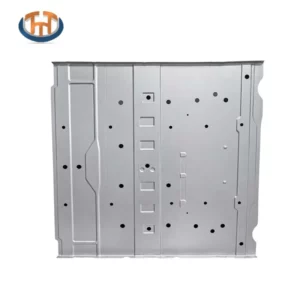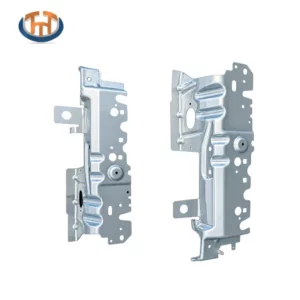

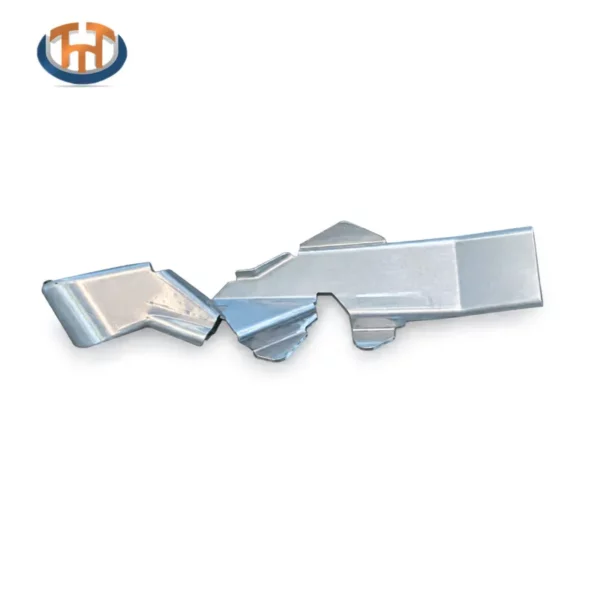
This AlMg3 aluminum automotive stamping part is a lightweight three-dimensional sheet metal component formed from 2.0 mm AlMg3 aluminum alloy according to DIN EN 485.
The component features a complex formed geometry with multiple bends, flanges, stepped sections, and localized reinforcement areas. These features create a three-dimensional structure from a relatively flat aluminum sheet while maintaining defined mounting and functional areas.
The use of AlMg3 aluminum alloy provides a lightweight material option for automotive applications where component weight is an important consideration. The 2.0 mm sheet thickness provides a balance between lightweight construction and the structural requirements of the formed component.
For HONGXING, this project demonstrates the tooling requirements associated with forming aluminum sheet into a complex automotive geometry. Aluminum forming requires appropriate consideration of material behavior, forming transitions, surface conditions, and dimensional control during die development.
Aluminum Sheet Metal Forming Characteristics
Unlike a simple flat stamping, this component contains multiple formed areas that extend beyond the original sheet plane.
The main geometry includes:
- Multiple bends
- Formed sections
- Flanged edges
- Stepped surfaces
- Localized reinforcement areas
- Integrated mounting features
These features are formed directly into the sheet rather than being added as separate components. The result is an integrated three-dimensional structure with defined edges, surfaces, and functional areas.
For tooling development, the transitions between individual formed sections are particularly important. Proper forming sequence and controlled material flow help maintain the intended geometry while minimizing dimensional variation.
HONGXING develops customized automotive stamping dies according to component geometry, material grade, sheet thickness, and press requirements.
Product Characteristics
| Item | Specification |
|---|---|
| Material | AlMg3 Aluminum Alloy |
| Material Standard | DIN EN 485 |
| Sheet Thickness | 2.0 mm |
| Part Type | Automotive Sheet Metal Component |
| Construction | Three-Dimensional Formed Sheet |
| Main Features | Bends, Flanges, Formed Sections, Reinforcement Areas |
| Material Characteristic | Lightweight Aluminum Construction |
| Application | Automotive Body and Structural Components |
Aluminum Forming and Die Development
The forming behavior of aluminum differs from conventional automotive steels, so die development needs to account for the material’s specific characteristics.
For complex aluminum components, tooling development may require attention to:
- Material flow
- Forming direction
- Bend transitions
- Surface contact
- Dimensional accuracy
- Springback behavior
- Flange geometry
- Part positioning
HONGXING uses engineering analysis, precision machining, die assembly, and tryout to develop tooling suitable for the required component geometry.
For applications involving high-strength automotive materials, HONGXING also manufactures High Strength Steel Stamping Dies.
Complex Three-Dimensional Forming
The geometry of this component demonstrates how multiple forming functions can be incorporated into a single sheet metal part.
Instead of producing a flat profile and attaching additional formed elements separately, the required bends, flanges, stepped areas, and reinforcement features are integrated into the formed sheet.
This approach can help create a lightweight component with defined structural geometry while reducing the need for additional fabricated features.
From a tooling perspective, the complex geometry requires accurate forming surfaces and controlled relationships between different die sections.
HONGXING’s precision stamping dies are developed for applications where dimensional control and repeatable forming are important.
HONGXING Aluminum Stamping Die Capability
HONGXING specializes in the design and manufacturing of automotive stamping dies, including tooling for aluminum and other sheet metal materials.
Our tooling development process can include:
- Product and drawing review
- Forming process analysis
- Die design
- CNC machining
- Die assembly
- Tryout
- Dimensional inspection
- Tooling adjustment and validation
The actual tooling configuration depends on component geometry, material properties, production volume, press capacity, and customer requirements.
HONGXING focuses on manufacturing the stamping dies used to form automotive components, rather than mass-producing stamped parts.
Application
AlMg3 aluminum sheet forming can be applied to automotive body and structural components where lightweight construction and formed geometry are required.
Typical considerations include:
- Weight reduction
- Complex sheet forming
- Structural reinforcement
- Flanged mounting areas
- Dimensional consistency
- Material-specific forming requirements
This project provides an example of the type of aluminum sheet forming application for which HONGXING can develop customized stamping tooling.
For customers requiring tooling for different automotive production processes, HONGXING also manufactures Progressive Dies, Tandem Dies, and Single Hit Dies.
Customized Aluminum Automotive Stamping Dies
HONGXING can develop customized tooling based on:
- 2D engineering drawings
- 3D CAD data
- Aluminum alloy and material thickness
- Component geometry
- Press specifications
- Production requirements
- Customer tooling standards
By combining die engineering, CNC machining, assembly, tryout, and dimensional inspection, HONGXING provides customized tooling solutions for automotive sheet metal forming applications.
Contact HONGXING Tool & Die to discuss your aluminum automotive stamping die project.