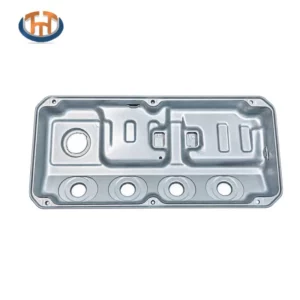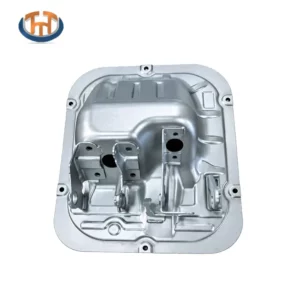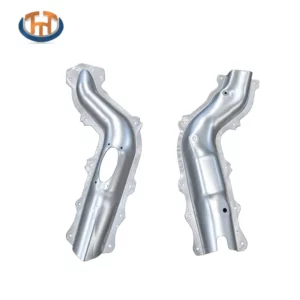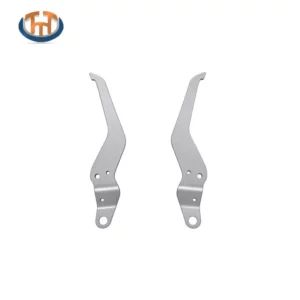

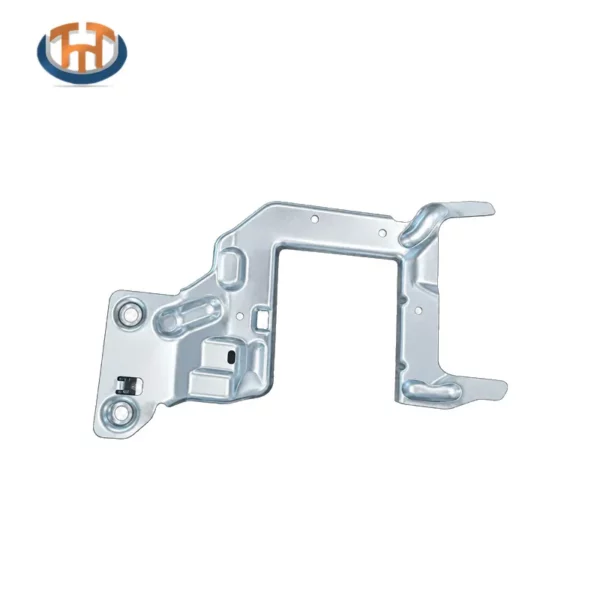
The Automotive Battery Tray is a formed sheet metal component designed to provide a stable mounting and support structure within an automotive assembly. The component combines a relatively large mounting area with multiple formed reinforcement features, openings and attachment points to achieve the required structural geometry.
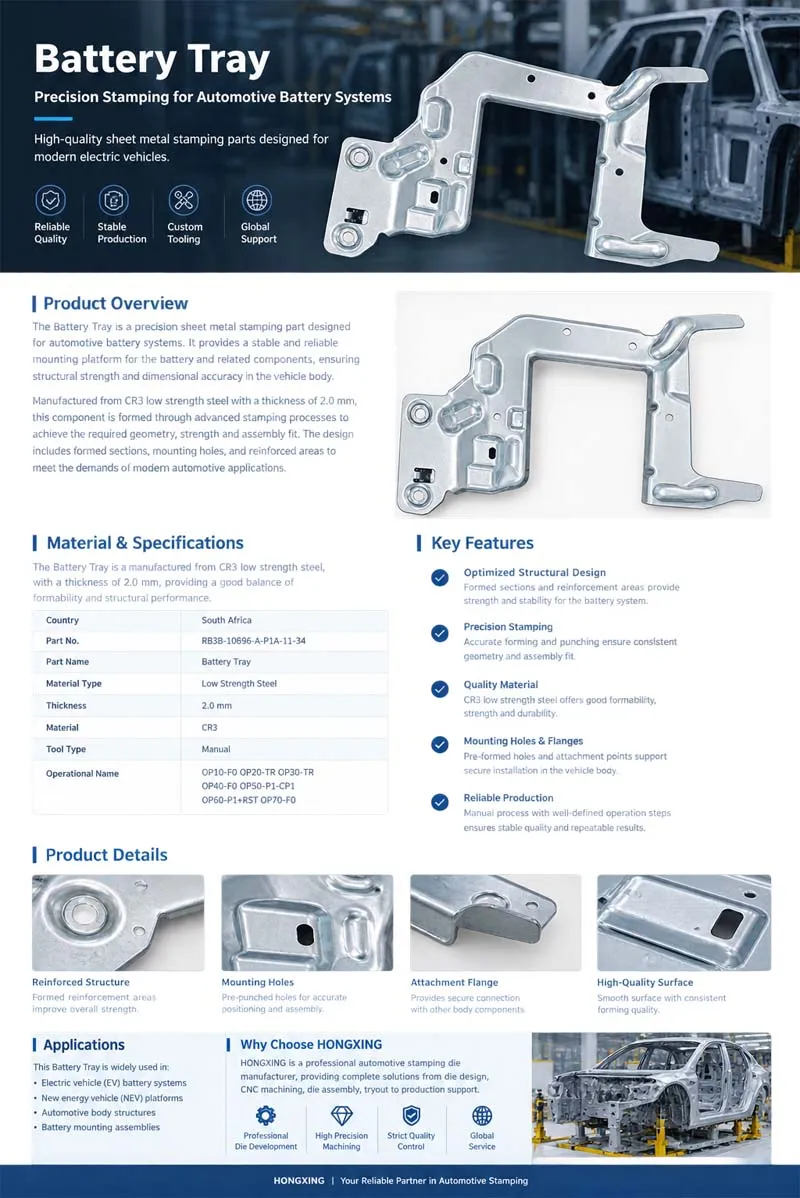
Manufactured from 2.0 mm CR3 low strength steel, the part is produced through controlled sheet metal forming and stamping operations. The material provides good formability for creating the different contours, recessed areas and reinforcement features visible on the finished component.
HONGXING focuses on automotive stamping die manufacturing and sheet metal forming, supporting customers with tooling development, CNC machining, die assembly, tryout and dimensional verification.
Material and Structural Design
The Automotive Battery Tray uses CR3 low strength steel with a material thickness of 2.0 mm. Low strength steel is commonly selected for sheet metal components where good formability and stable production performance are important considerations.
The 2.0 mm sheet thickness provides a suitable basis for forming the component’s structural features while allowing the material to be shaped into the required three-dimensional profile.
The finished part incorporates several formed areas, including raised reinforcement sections, recessed features, mounting surfaces and attachment flanges. These features help create a more rigid component geometry compared with a completely flat sheet metal part.
Formed Sheet Metal Geometry
One of the main characteristics of this Automotive Battery Tray is its three-dimensional formed geometry.
The component includes several different types of formed features:
- Reinforced circular sections
- Raised forming areas
- Recessed structural sections
- Mounting holes
- Rectangular openings
- Attachment flanges
- Curved transition areas
- Formed edge sections
Each feature has to be properly controlled during the stamping process. The position and shape of mounting holes are particularly important because they provide defined interfaces for assembly.
The formed reinforcement areas also contribute to the overall rigidity of the component while maintaining the required shape of the sheet metal structure.
Automotive Sheet Metal Stamping
Manufacturing an Automotive Battery Tray requires the sheet material to be progressively shaped into the required geometry while controlling deformation and dimensional variation.
The stamping process may involve several operations for forming, trimming, piercing and other required features. According to the supplied production information, this component uses a manual tool type.
For manually operated stamping processes, appropriate process sequencing and tooling design remain important. The forming sequence needs to account for material flow, forming depth, flange geometry, openings and the relationship between different formed surfaces.
HONGXING can develop the corresponding stamping tooling based on the component geometry and production requirements, with attention to forming quality and dimensional consistency.
Automotive Stamping Die
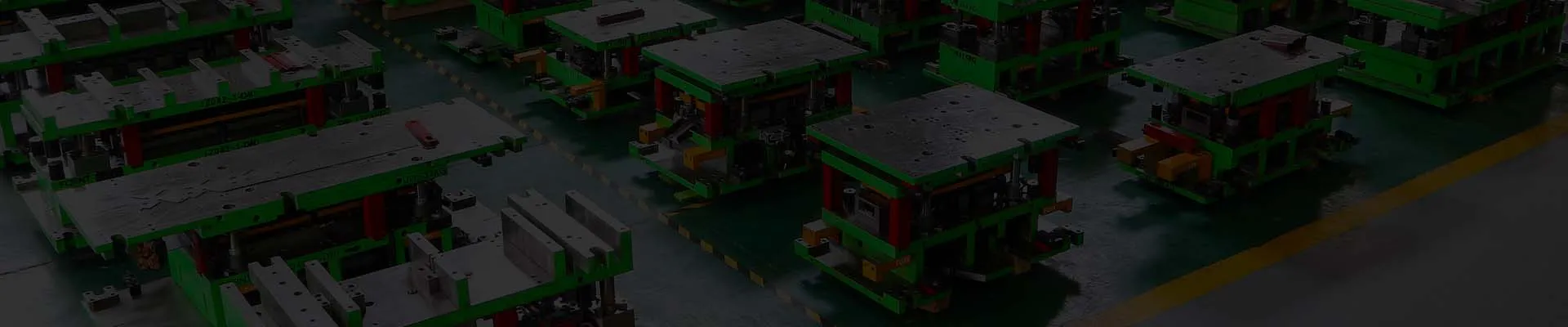
The stamping die is an important part of the manufacturing process for this type of sheet metal component. Accurate tooling helps establish the required profile, reinforcement features, holes and attachment surfaces.
HONGXING’s automotive stamping die capabilities cover:
- Die design
- Process development
- CNC machining
- Die component manufacturing
- Die assembly
- Tryout
- Part adjustment
- Dimensional inspection
- Production validation
During die tryout, sample parts can be inspected to evaluate the formed geometry and identify areas requiring tooling adjustment.
For components with multiple formed surfaces, proper die alignment and forming control are important for maintaining repeatable part quality.
Mounting and Attachment Features
The Automotive Battery Tray contains multiple holes and attachment areas distributed across the component. These features are designed to provide defined connection points within the corresponding automotive assembly.
The mounting areas need to maintain their intended location and geometry so that the component can be positioned correctly during assembly.
Formed edges and flanges also provide additional attachment surfaces. Their dimensional accuracy can influence the fit between the battery tray and surrounding components.
HONGXING pays attention to these critical features during tooling tryout and dimensional verification.
Dimensional Accuracy
Dimensional consistency is an important consideration for automotive stamped components. Even relatively small deviations in mounting holes, formed surfaces or flange positions can affect assembly.
For the Automotive Battery Tray, key inspection areas can include:
- Overall component profile
- Hole position
- Opening dimensions
- Formed surface geometry
- Reinforcement features
- Flange position
- Edge profile
- Mounting interfaces
Inspection during the tooling development stage allows potential dimensional issues to be identified before stable production.
Production and Quality Control
The production information specifies a manual tooling process for this component. A controlled manufacturing process helps maintain consistency between individual stamped parts.
HONGXING combines tooling development, CNC machining, die assembly and tryout capabilities to support automotive sheet metal projects.
Quality control can be applied throughout the manufacturing process, from tooling preparation through sample production and dimensional verification. Particular attention can be given to critical forming areas and assembly interfaces.
This approach helps ensure that the finished component maintains its intended geometry and can meet the requirements of the customer’s assembly process.
Applications
A formed Automotive Battery Tray can be used in vehicle assemblies where a sheet metal support or mounting structure is required.
Potential applications include:
- Automotive battery mounting systems
- Vehicle body assemblies
- Underbody structures
- Battery support structures
- Sheet metal mounting assemblies
- Automotive structural applications
The actual application and installation position depend on the vehicle architecture and the requirements of the final assembly.
Why Choose HONGXING
HONGXING is an automotive stamping die manufacturer specializing in tooling and formed sheet metal components for the automotive industry.
Our capabilities include automotive stamping die design, CNC machining, die assembly, tryout and dimensional verification. These capabilities allow HONGXING to support projects involving formed structural parts, brackets, reinforcement components and other automotive sheet metal applications.
For customers requiring an Automotive Battery Tray, HONGXING can provide tooling and manufacturing support based on the required part geometry, material specifications and production process.
Our focus is not only on producing the individual stamped component but also on developing stable tooling and controlled manufacturing processes to achieve repeatable quality.
Conclusion
The Automotive Battery Tray shown here is manufactured from 2.0 mm CR3 low strength steel and features a combination of formed reinforcement areas, mounting holes, openings and attachment surfaces.
Its three-dimensional geometry demonstrates the importance of controlled sheet metal forming and accurate stamping tooling in automotive component manufacturing.
With capabilities covering automotive stamping die manufacturing, CNC machining, die assembly, tryout and dimensional verification, HONGXING provides tooling and production support for automotive sheet metal components and structural assemblies.