
Product Overview
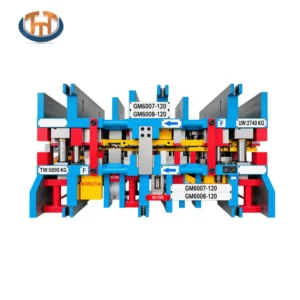
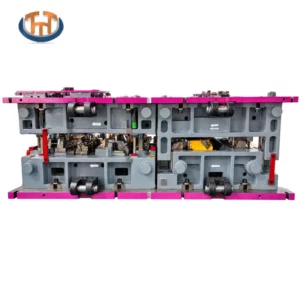
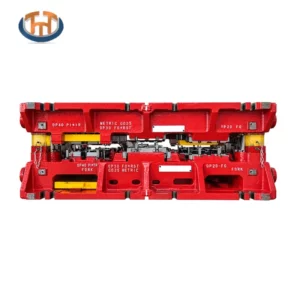
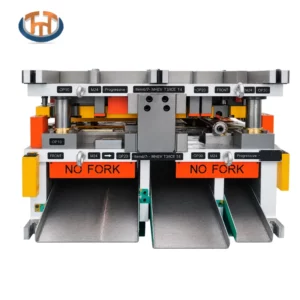
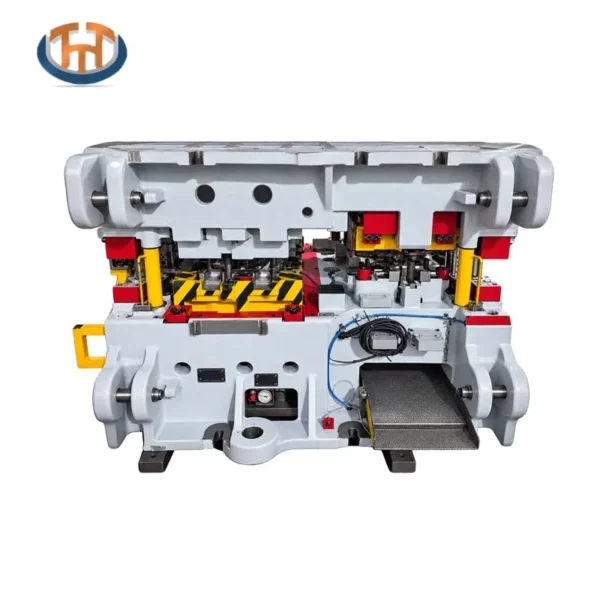
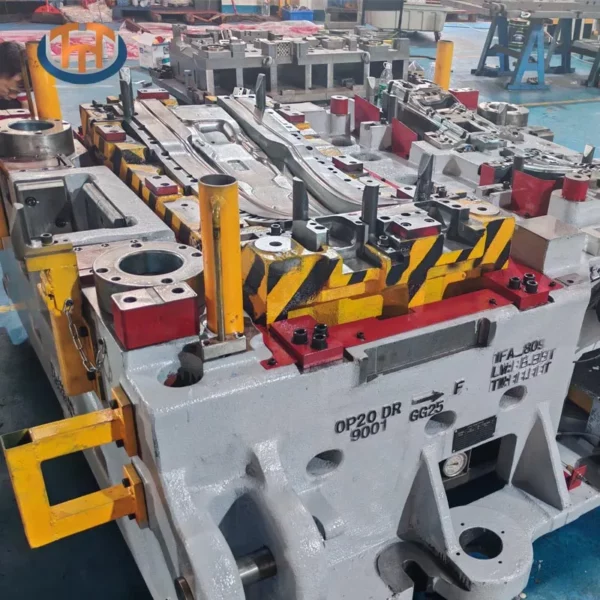
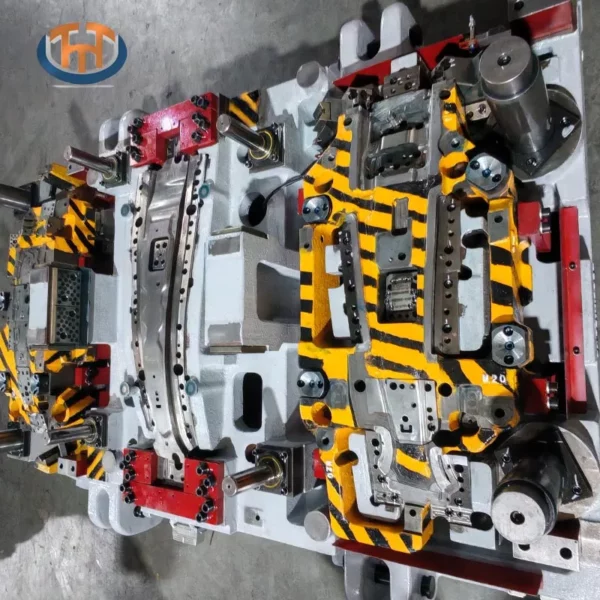
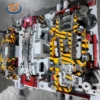
HONGXING manufactures custom B-Pillar Inner Transfer Stamping Dies for automotive body structural components. Designed for a five-operation stamping process, this transfer die supports the forming of complex inner-panel features while maintaining dimensional consistency throughout production.
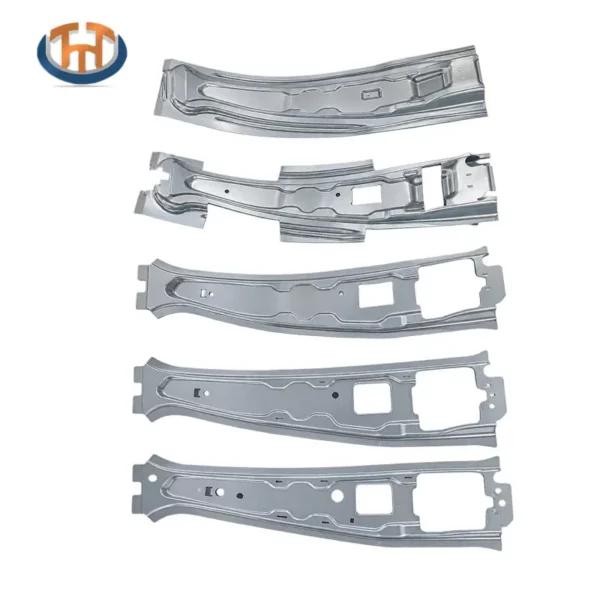
The B-pillar is an important structural section of an automotive body. Its inner panel may incorporate formed contours, reinforcement features, mounting openings, and precision cutouts. Producing these features requires coordinated forming operations, reliable part positioning, and accurate control of the die structure.
This project uses 0.8 mm high-strength steel specified as CR380LA-UC-U in the engineering documentation. The tooling is designed for an 800-ton press and is engineered around the component geometry, material characteristics, and production requirements.
Product Specifications
| Item | Specification |
|---|---|
| Product | B-Pillar Inner Transfer Stamping Die |
| Application | Automotive Body Structural Components |
| Die Type | Transfer Stamping Die |
| Number of Operations | 5 |
| Press Capacity | 800 Ton |
| Die Dimensions | Approx. 1,782 × 2,030 × 1,240 mm |
| Upper Die Weight | Approx. 4,720 kg |
| Total Die Weight | Approx. 11,113 kg |
| Shut Height | 1,110 mm |
| Blank Size | Approx. 1,060 × 375 mm |
| Material | CR380LA-UC-U, as specified in the project documentation |
| Sheet Thickness | 0.8 mm |
| Engineering System | CATIA V5 |
| Manufacturing Process | CNC Machining, Die Assembly, Tryout and Dimensional Validation |
Specifications are based on the supplied engineering drawing and die nameplate. Final tooling details should be confirmed against the approved project documentation.
Five-Operation Transfer Stamping Process
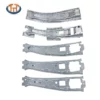
This B-pillar inner panel tooling uses a five-operation transfer stamping process. The component progresses through the planned operations to develop its required geometry and features.
A transfer die process requires coordination between the individual stations, part positioning, tooling clearances, and the transfer mechanism. Each operation must be developed in relation to the component’s final geometry and the material’s forming characteristics.
For thin-gauge, high-strength steel, engineering considerations include:
- Forming sequence: Organizing the five operations to develop the component geometry in a controlled sequence.
- Dimensional consistency: Maintaining alignment and repeatability across successive operations.
- Feature accuracy: Controlling formed contours, openings, and cutout locations according to the approved drawing.
- Material behavior: Evaluating the forming response of 0.8 mm high-strength steel during tooling development and tryout.
- Production stability: Checking part transfer, positioning, and die operation during validation.
The exact function of each operation depends on the approved process layout and tooling design.
Engineering and Manufacturing Capabilities
HONGXING combines tooling engineering, CNC machining, die assembly, and tryout capabilities to manufacture automotive transfer stamping dies.
1. Engineering Review
The component geometry and material specifications are reviewed to support the transfer process design. The engineering team evaluates forming requirements, dimensional control points, and the relationship between the five operations.
2. Precision CNC Machining
Die components are machined according to approved engineering data. Machining accuracy and surface quality contribute to proper assembly, alignment, and repeatable tooling performance.
3. Die Assembly and Alignment
The die is assembled and checked to ensure that the relevant tooling components are properly positioned and aligned. Transfer-related clearances and part-location requirements are considered during setup.
4. Tryout and Dimensional Validation
During tryout, the tooling is evaluated under the intended production conditions. The resulting stamped parts can be checked against the approved dimensional requirements, with adjustments made where necessary.
Learn more about our automotive manufacturing capabilities and tool and die manufacturing services.
Applications in Automotive Body Manufacturing
B-pillar inner panels are used in automotive body structures and require tooling capable of producing complex geometry with consistent dimensional quality.
This type of transfer stamping die is relevant to automotive body-in-white manufacturing programs where the component design, material grade, sheet thickness, and production requirements call for a dedicated multi-operation tooling solution.
For related tooling solutions, explore our automotive structural stamping die and automotive stamping die pages.
Custom Automotive Transfer Die Manufacturer
HONGXING, part of TTM GROUP, provides custom automotive stamping die solutions for body structural and sheet-metal components. Our tooling development process covers engineering review, machining, assembly, tryout, and dimensional validation.
If you are sourcing a B-Pillar Inner Transfer Stamping Die or another automotive body structural die, contact our team to discuss your component drawings, material specifications, press requirements, and production objectives.
Email: ttm@ttmgauge.com
Request a Quote for your automotive transfer stamping die project.