
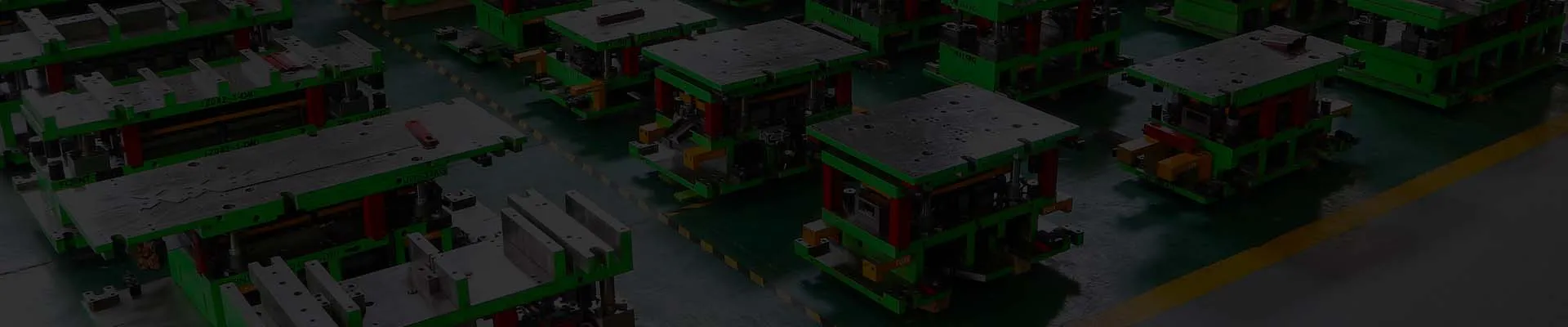
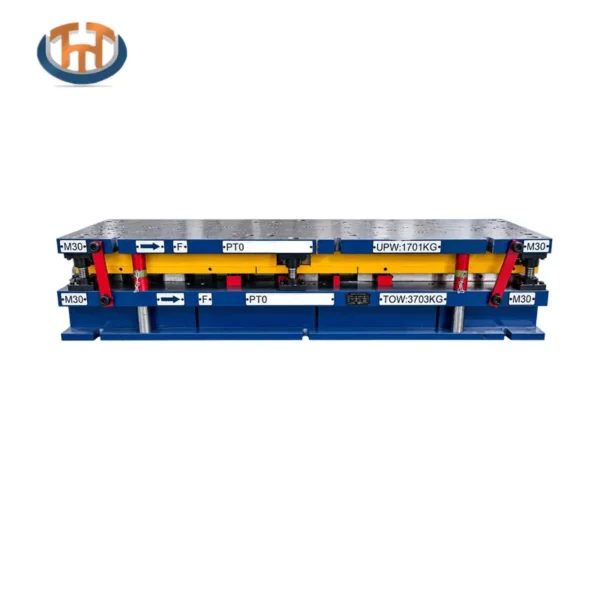
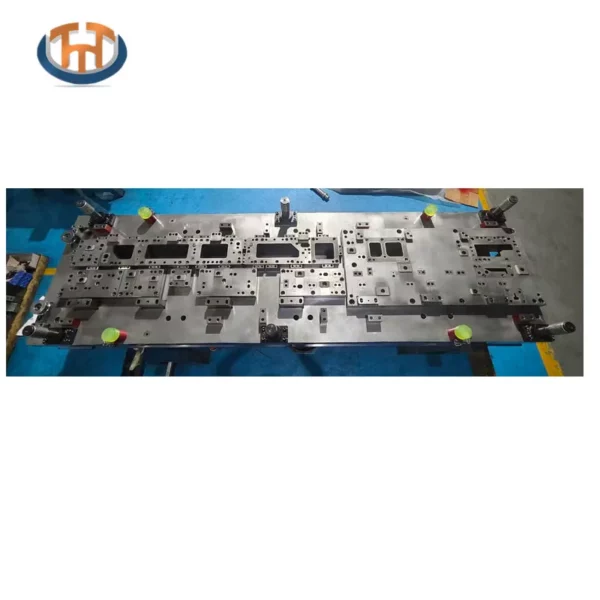
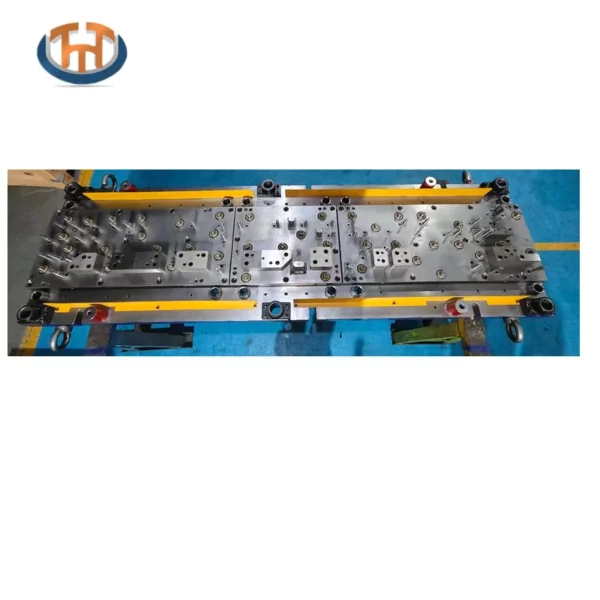
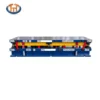
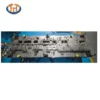
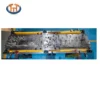
HONGXING manufactures custom automotive battery panel attachment stamping dies for sheet metal components that require accurate mounting interfaces, controlled forming geometry, and repeatable production quality. This tooling project demonstrates our capability to develop dedicated automotive stamping dies for battery-related attachment structures and high-strength steel components.
Unlike tooling designed primarily for large exterior panels, battery panel attachment tooling must pay close attention to the dimensional relationships between locating features, mounting holes, mating surfaces, and surrounding structural components. These details influence how accurately a stamped component fits into its intended assembly.
As an automotive tooling manufacturer within TTM Group, HONGXING provides engineering support, precision machining, die assembly, tryout, and dimensional verification for customized automotive stamping projects.
Tooling Designed for Battery Panel Attachment Components
Automotive battery-related assemblies may contain panels, attachment structures, mounting interfaces, and connecting features that must work together within a defined installation space.
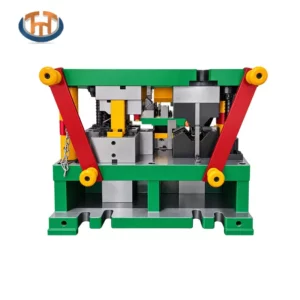
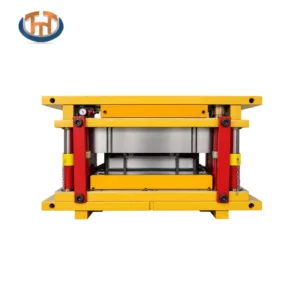
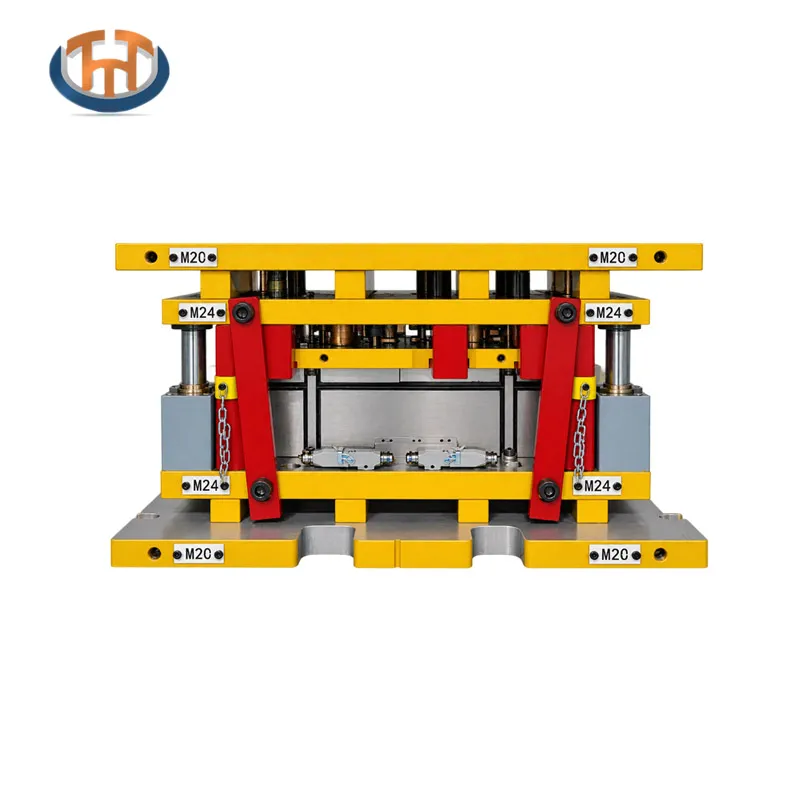
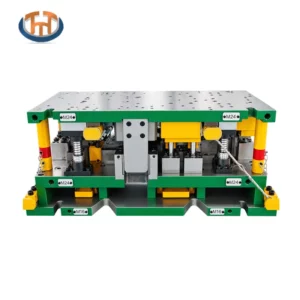
The stamping die shown in this project uses a substantial upper-and-lower tooling structure with a machined working surface, guide elements, support components, and mechanical connections. Its construction reflects the importance of maintaining tooling alignment and structural stability throughout the forming process.
For attachment components, tooling development needs to consider more than the external profile of the part. Engineering attention should also be given to:
- The relationship between primary locating datums and functional features
- Mounting-hole position and dimensional consistency
- Mating surfaces that interface with adjacent components
- Formed geometry and local material deformation
- Trim edges, burr control, and surface condition
- Repeatability between left-hand and right-hand component variants, where applicable
These requirements need to be evaluated against the approved part data and the customer’s production specifications.
High-Strength Steel Forming Considerations
Battery attachment components may use high-strength steel when the application requires specific structural and packaging characteristics. The appropriate stamping process depends on the selected steel grade, sheet thickness, component geometry, and forming requirements.
When working with high-strength sheet materials, die engineering should account for material flow, springback, local deformation, and dimensional changes after forming and trimming.
The tooling design must provide suitable working surfaces and controlled forming conditions for the intended component. Where the part includes multiple holes, formed sections, or interfaces with neighboring structures, the process sequence should be developed to maintain the required relationships between these features.
HONGXING can evaluate customer-supplied 2D drawings and 3D CAD data to develop a suitable tooling concept. The final process, die configuration, and production parameters are determined by the specific project requirements.
For related tooling applications, explore our automotive stamping die manufacturing solutions.
Precision Control of Mounting Features and Mating Surfaces
Attachment components frequently contain functional features that connect them to other parts of a vehicle assembly. Even when individual holes or surfaces appear relatively simple, their positional relationships can influence the overall assembly result.
A suitable stamping die should be developed around the approved datum structure and dimensional requirements. During engineering and tryout, particular attention can be given to:
Datum-based dimensional control: Establishing a consistent reference scheme helps evaluate the position of critical features relative to the component’s intended assembly geometry.
Hole and edge accuracy: Piercing and trimming operations should be coordinated with the forming sequence to achieve the specified geometry and edge quality.
Mating-surface consistency: Contact areas and interfaces need to maintain the required shape and position to support reliable component integration.
Repeatable production: Tool alignment, component condition, process parameters, and inspection results should be reviewed to identify potential sources of dimensional variation.
Where required by the project, dimensional verification can be performed against the approved drawing, CAD model, and customer inspection criteria.
Left-Hand and Right-Hand Component Compatibility
Some automotive attachment assemblies use corresponding left-hand and right-hand components. These variants may share similar design principles while differing in orientation, feature location, or mating geometry.
For paired components, the tooling and inspection strategy should clearly identify the requirements applicable to each variant. Symmetrical appearance alone does not establish dimensional equivalence; each component must conform to its approved engineering definition.
HONGXING can support tooling development for projects involving paired components, multiple design variants, and defined assembly interfaces. Engineering review focuses on the specific part geometry and the customer’s requirements for dimensional control and production validation.
HONGXING Automotive Stamping Die Manufacturing Process
A reliable tooling project requires coordinated work from engineering through final validation.
1. Engineering review
Review the supplied part drawings, 3D CAD data, material specification, critical dimensions, and intended production conditions.
2. Tooling design and process planning
Develop the tooling concept and forming sequence according to the component geometry, functional features, and manufacturing requirements.
3. Precision machining
Machine the required die components and working surfaces to the approved engineering data.
4. Die assembly and adjustment
Assemble the tooling, check alignment and movement, and make the adjustments required for the intended forming process.
5. Tryout and dimensional verification
Produce trial components and evaluate their geometry, functional features, and dimensional results against the approved requirements.
6. Production readiness and support
Review outstanding tooling or quality issues and support the customer through the agreed project validation process.
For projects requiring larger tooling structures or demanding automotive forming applications, HONGXING also provides large automotive stamping die solutions.
Applications in Automotive Battery and Structural Assemblies
Automotive battery panel attachment stamping dies may be used for components associated with:
- Battery assembly mounting interfaces
- Sheet metal attachment panels
- Automotive structural connections
- Brackets and connecting features
- Vehicle body and underbody assemblies
- Other application-specific stamped steel components
The actual application depends on the vehicle platform, component design, and approved engineering documentation. Tooling specifications should therefore be established for each project rather than assumed from the general component category.
HONGXING also manufactures tooling for other automotive structural applications. Visit our automotive structural stamping die page to explore a different category of automotive tooling.
Why Choose HONGXING for Custom Automotive Stamping Dies?
HONGXING focuses on customized automotive stamping die manufacturing for automotive manufacturers and Tier 1 suppliers. Our manufacturing capabilities cover tooling engineering, CNC machining, die assembly, tryout, dimensional verification, and project-specific production support.
We understand that successful automotive tooling is measured not only by the physical construction of the die, but also by its ability to produce components that meet defined engineering and quality requirements.
For battery panel attachment projects, our engineering approach emphasizes functional feature relationships, forming feasibility, tooling alignment, and repeatable dimensional results. Each project is evaluated according to its actual component geometry, material requirements, and intended manufacturing process.
Request a Quote for an Automotive Battery Panel Attachment Stamping Die
Looking for a tooling manufacturer for battery attachment panels or other automotive sheet metal components?
Contact HONGXING to discuss your project. Share your 2D drawings, 3D CAD data, material specifications, target production volume, and press requirements so our engineering team can evaluate the application and recommend a suitable tooling solution.
HONGXING, a member of TTM Group, provides customized automotive stamping dies and tooling solutions for global automotive manufacturing projects.