

Introduction: The Transformation of the Stamping Industry
Smart Manufacturing in the Stamping Industry,The automotive manufacturing industry is entering a new era driven by automation, digital technology, and intelligent production systems. Traditional stamping production methods are gradually evolving into smart manufacturing solutions that integrate advanced stamping dies, industrial robots, automated production lines, and real-time quality monitoring systems.
Smart manufacturing in the stamping industry enables manufacturers to improve production efficiency, reduce labor costs, enhance product quality, and achieve more flexible manufacturing processes. For automotive stamping manufacturers, adopting intelligent technologies has become an important way to remain competitive in the global market.
As a professional automotive stamping die manufacturer, HONGXING (TTM Group) continuously integrates advanced manufacturing technologies into stamping die development, automation systems, and precision inspection solutions to support customers worldwide.
What Is Smart Manufacturing in the Stamping Industry?
Smart manufacturing in the stamping industry refers to the application of digital technologies, automation equipment, intelligent control systems, and data management platforms throughout the stamping production process.
Unlike traditional stamping production, smart stamping manufacturing connects equipment, production processes, quality inspection systems, and manufacturing data into one intelligent production network.
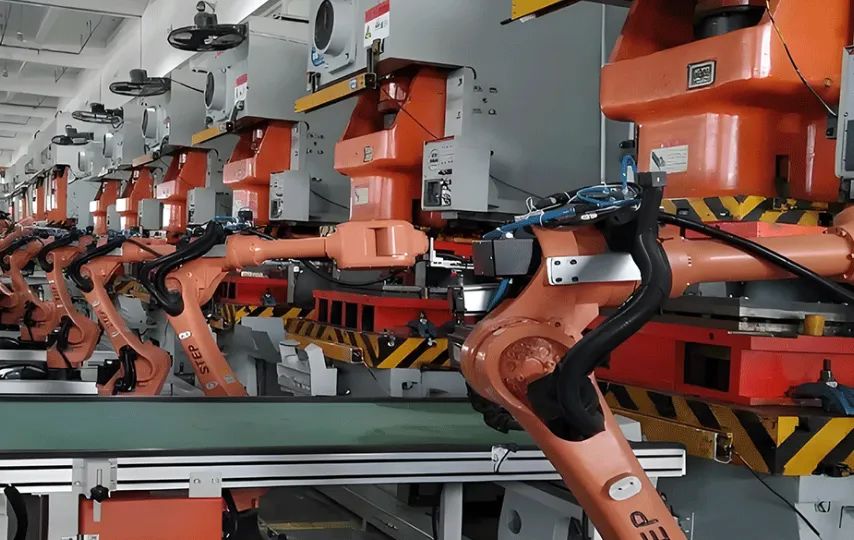
The key technologies include:
- Automated stamping production lines
- Industrial robots
- Smart stamping dies
- Digital inspection systems
- Manufacturing Execution Systems (MES)
- Real-time production monitoring
- Data-driven maintenance
Through these technologies, manufacturers can achieve higher efficiency, better quality control, and more stable production performance.
1. Automated Stamping Production Lines Improve Manufacturing Efficiency
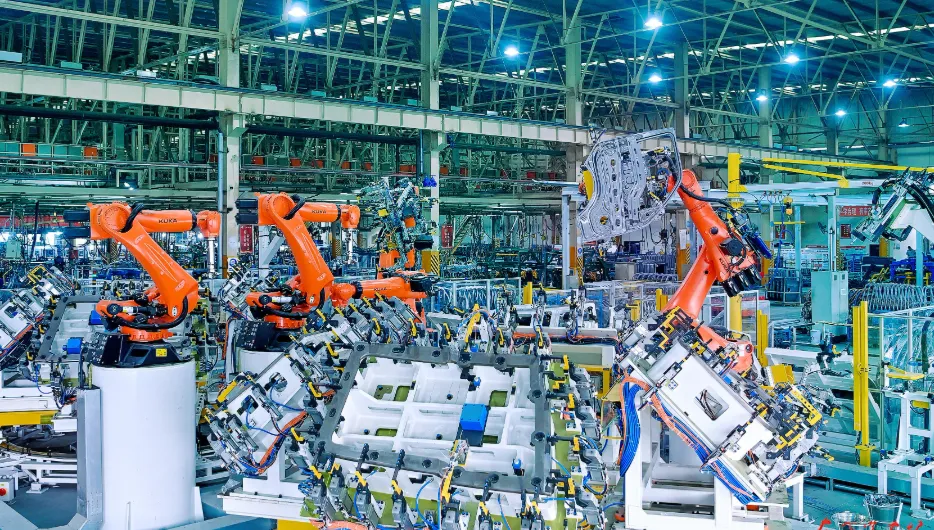
Smart Manufacturing in the Stamping Industry,One of the most important applications of smart manufacturing in the stamping industry is the development of automated stamping production lines.
Traditional stamping processes often require manual material handling between different operations. Smart stamping production lines use automatic feeding systems, transfer equipment, and industrial robots to complete continuous production.
Benefits include:
- Higher production speed
- Reduced manual operation risks
- Improved production consistency
- Lower manufacturing costs
- Increased workplace safety
For automotive components with high production volumes, automated stamping lines provide a reliable solution for mass production.
TTM Group provides automated manufacturing solutions that combine stamping dies, robotic systems, and production equipment to help customers achieve efficient automotive component manufacturing.
2. Smart Stamping Dies Enable More Precise Production
Smart Manufacturing in the Stamping Industry,Stamping dies are the foundation of automotive sheet metal manufacturing. With the development of smart manufacturing, modern stamping dies are becoming more intelligent and precise.
Advanced stamping dies can integrate:
- High precision machining technology
- Sensor monitoring systems
- Optimized material flow design
- Longer service life solutions
- Digital simulation technology
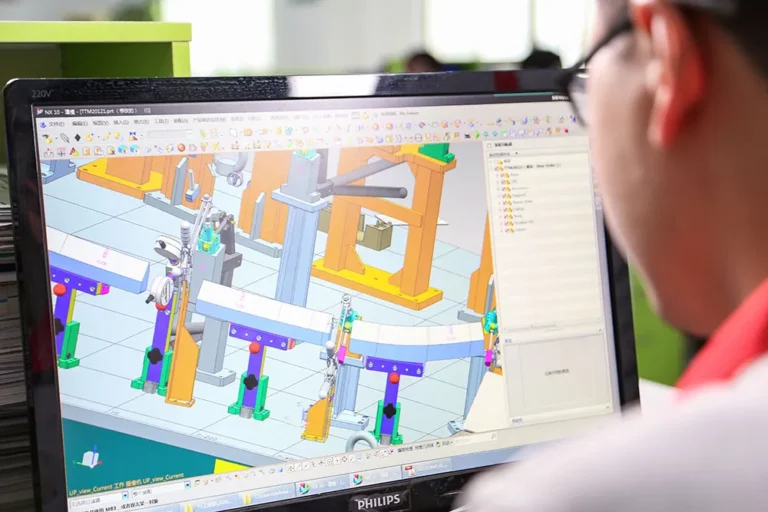
Progressive Dies, Tandem Dies, and Single Operation Dies are widely used in automotive stamping production.
By applying intelligent design methods, manufacturers can reduce die development time, improve stamping accuracy, and minimize production defects.
3. Industrial Robots Bring Automation to Stamping Processes
Industrial robots play an important role in smart stamping manufacturing.
Robots can perform:
- Sheet metal loading and unloading
- Part transfer between stamping operations
- Automated palletizing
- Production line transportation
Robot automation improves production flexibility and allows manufacturers to operate continuous production lines with fewer manual operations.
In automotive manufacturing, robotic automation is especially valuable because vehicle body components require high precision, stable quality, and large production volumes.
4. Digital Inspection Improves Quality Control
Quality control is a critical part of smart manufacturing in the stamping industry.
Traditional inspection methods often rely on manual measurement, which can be time-consuming and less efficient for large automotive components.
Modern smart inspection solutions use:
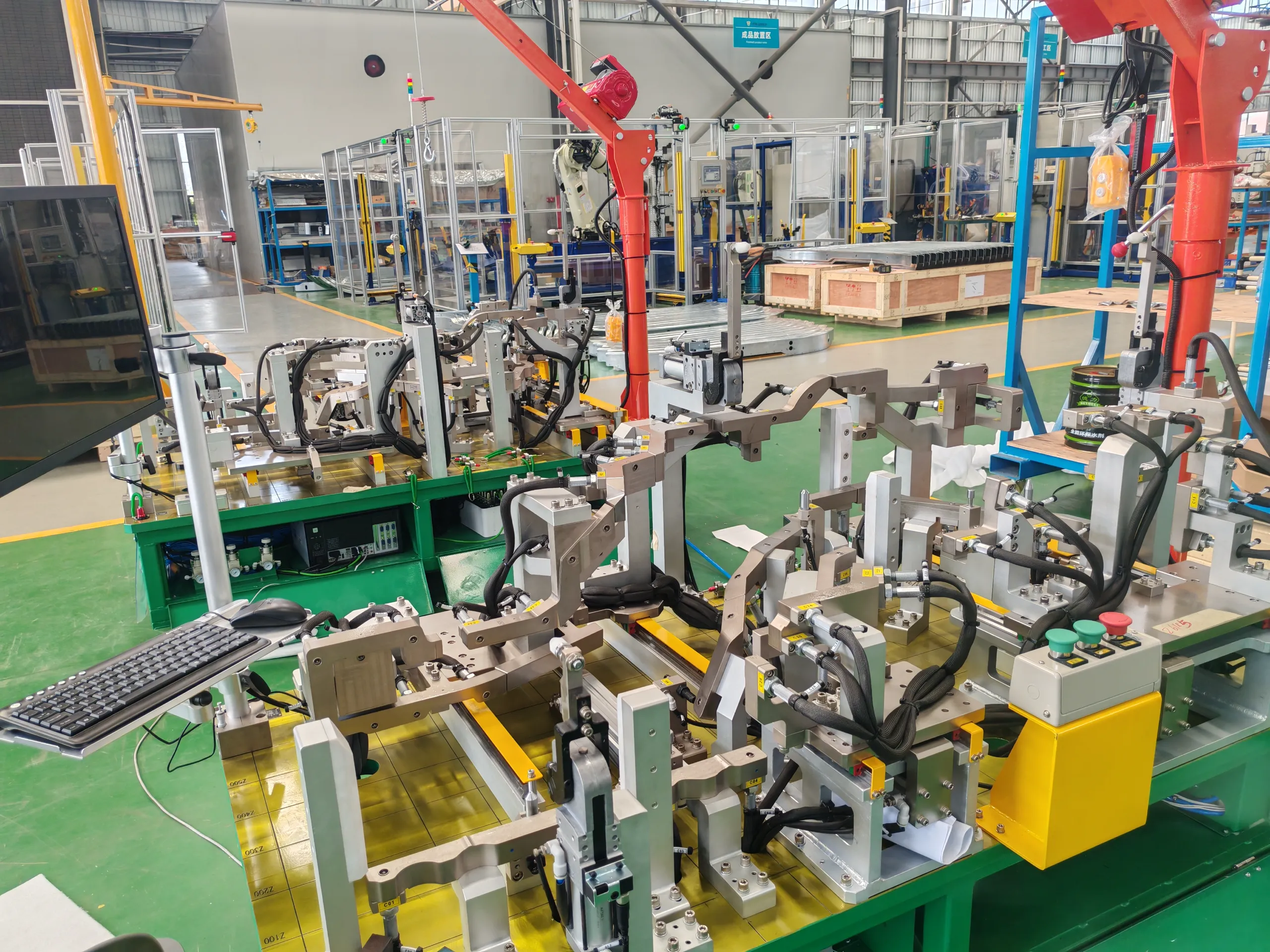
- Electronic Checking Fixtures
- Digital measurement systems
- Sensors
- Automated data collection
- Online inspection technology
These systems can quickly detect dimensional deviations and provide accurate inspection data.
TTM Group develops advanced checking fixtures and digital inspection solutions for automotive body components, helping customers improve quality control efficiency.
5. Data Management Creates Smart Factories
Data is the foundation of intelligent manufacturing.
Modern stamping factories collect production information from:
- Stamping presses
- Robots
- Inspection equipment
- Production management systems
Through MES and digital factory systems, manufacturers can monitor:
- Production output
- Equipment status
- Quality performance
- Downtime reasons
- Manufacturing efficiency
Data analysis helps companies optimize production processes and make faster decisions.
6. Predictive Maintenance Reduces Production Downtime
Smart manufacturing also improves equipment maintenance.
Traditional maintenance usually depends on fixed schedules or manual inspections. Intelligent manufacturing systems analyze equipment operation data and identify potential problems before failures occur.
Predictive maintenance helps manufacturers:
- Reduce unexpected downtime
- Extend equipment lifespan
- Improve production stability
- Lower maintenance costs
For automotive stamping production, stable equipment performance is essential for maintaining delivery schedules and product quality.
The Future of Smart Manufacturing in Automotive Stamping
The future stamping factory will become more connected, automated, and intelligent.
With the development of Artificial Intelligence (AI), Industrial Internet of Things (IIoT), and digital manufacturing technologies, automotive stamping manufacturers will achieve:
- Fully automated production
- Real-time quality control
- Intelligent process optimization
- Flexible manufacturing systems
- Digital factory management
Companies that adopt smart manufacturing technologies will have stronger competitiveness in the global automotive supply chain.
Conclusion
Smart manufacturing in the stamping industry is changing the way automotive components are designed, produced, and inspected.
By combining intelligent stamping dies, automated production lines, robotic systems, and digital inspection technologies, manufacturers can achieve higher efficiency, better quality, and more flexible production capabilities.
With extensive experience in automotive stamping dies, automation systems, and checking fixtures, HONGXING (TTM Group) continues to provide intelligent manufacturing solutions for global automotive customers.
Contact us to explore advanced stamping manufacturing solutions for your next automotive project.