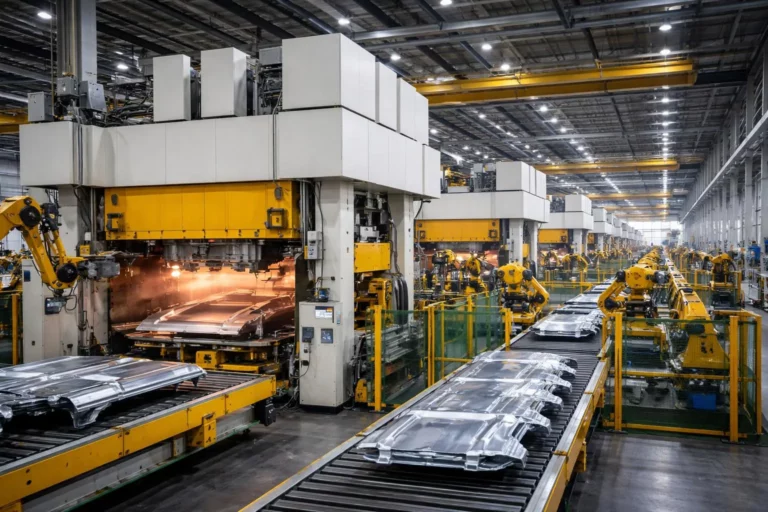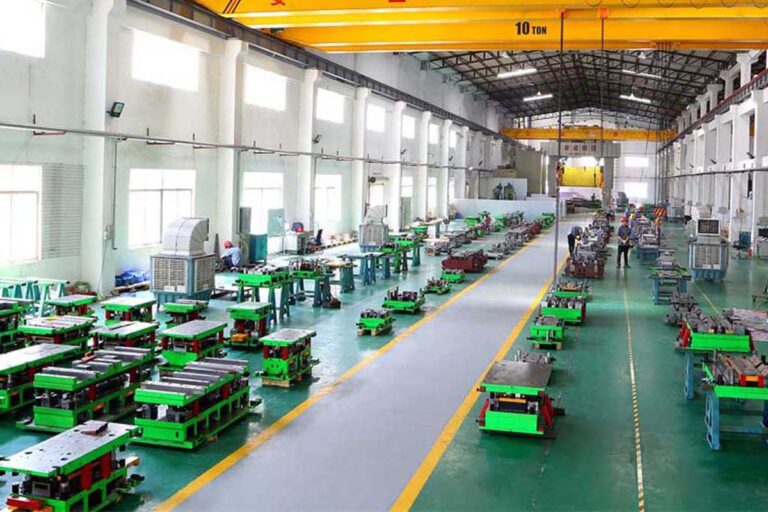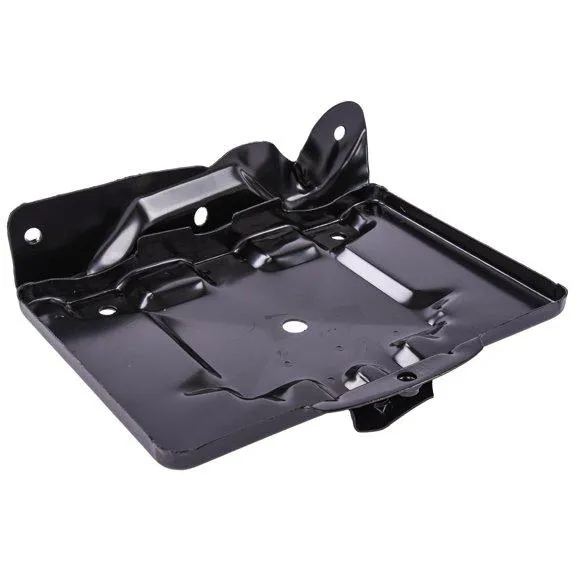


Automotive stamping parts are metal components manufactured by forming sheet metal into specific shapes using stamping presses and production tooling. They are widely used throughout modern vehicles, including body structures, chassis systems, seat assemblies, brackets, reinforcements, battery-related components, and other structural or functional assemblies.
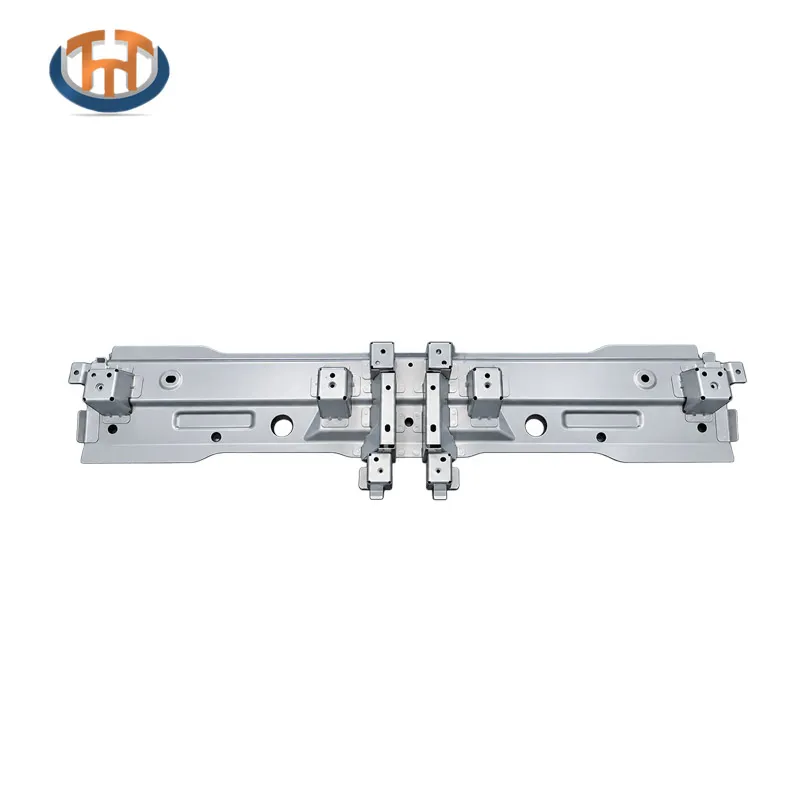
As automotive manufacturers continue to pursue lighter vehicle structures, higher crash safety, improved dimensional accuracy, and more efficient production, the requirements for automotive stamping parts have become increasingly demanding. The quality of the stamped component depends not only on the material and stamping process but also on the design, manufacturing, and validation of the tooling used to produce it.
For this reason, reliable automotive stamping dies play an important role in achieving stable production, accurate dimensions, consistent part quality, and long-term manufacturing performance.
What Are Automotive Stamping Parts?
Automotive stamping parts are sheet metal components produced through one or more forming operations. A stamping press applies controlled force to a metal sheet while a dedicated die shapes, cuts, bends, draws, or otherwise forms the material.
Depending on the component design, a stamping operation may include:
- Blanking
- Piercing
- Bending
- Drawing
- Flanging
- Trimming
- Forming
- Coining
Some components can be manufactured through a single operation, while more complex automotive stamping parts may require multiple forming stages.
The choice of process depends on the geometry, material grade, thickness, dimensional requirements, production volume, and final application of the component.
For automotive applications, stamping is particularly suitable for producing large quantities of repeatable metal components while maintaining consistent geometry and production efficiency.
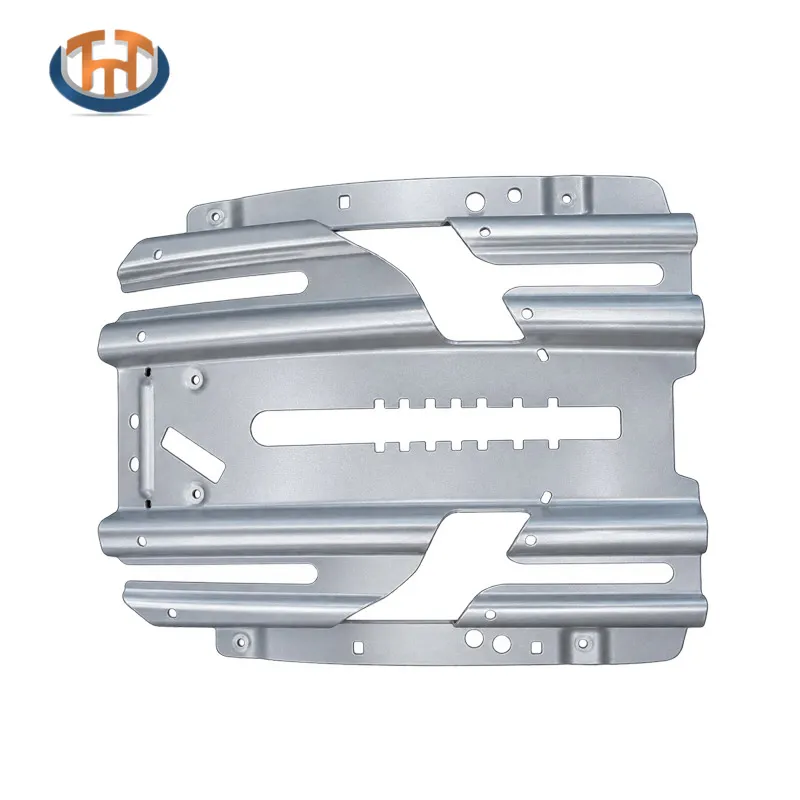
Common Types of Automotive Stamping Parts
Automotive stamping parts cover a wide range of components. Their size, shape, material, and manufacturing requirements can vary significantly depending on their position and function within the vehicle.
Automotive Structural Components
Structural stamping components are designed to provide strength, rigidity, and controlled load paths within the vehicle body or chassis.
Examples include:
- Cross members
- Pillar reinforcements
- Floor reinforcements
- Side reinforcements
- Structural brackets
- Beam components
- Reinforcement plates
These components may require high-strength materials and carefully controlled forming processes because dimensional accuracy and structural performance are important to the finished vehicle.
Automotive Brackets
Brackets are another common category of automotive stamping parts. They are used to support, connect, position, or reinforce other components.
Examples include:
- HVAC brackets
- Seat brackets
- Wiring harness brackets
- Mounting brackets
- Support brackets
- Battery-related brackets
Although some brackets are relatively small, their holes, bends, mounting surfaces, and forming features may require precise tooling to ensure correct assembly.
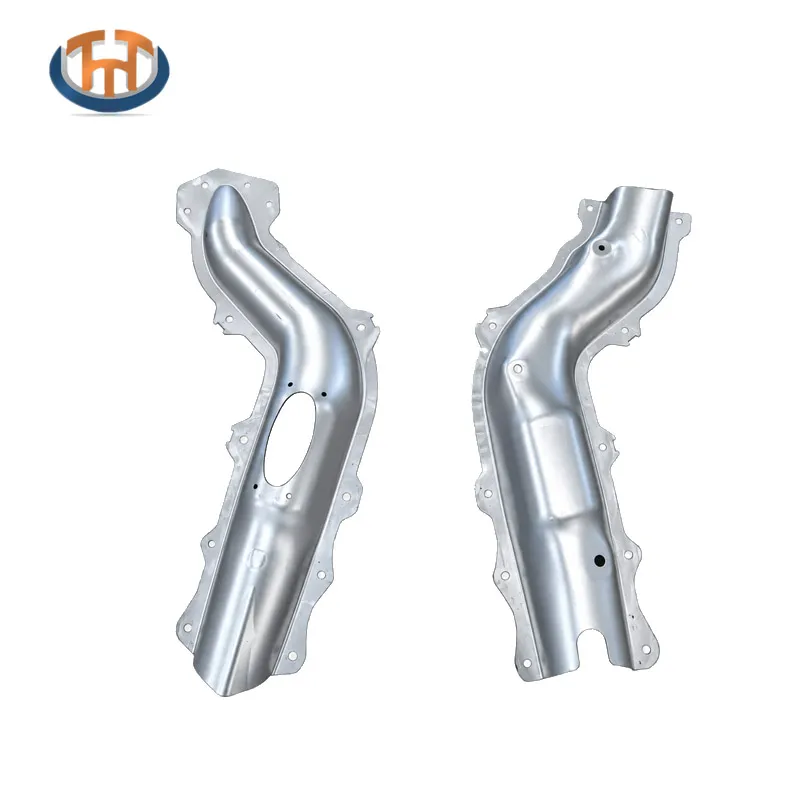
Automotive Body Components
Automotive body structures also contain many stamped metal components. Depending on the vehicle design, these can include body panels, reinforcements, supports, and other formed sheet metal components.
Large body components often require complex tooling and carefully controlled forming sequences to achieve the required shape and surface quality.
Materials Used for Automotive Stamping Parts
Material selection is one of the most important factors in automotive stamping.
Traditional automotive stamping parts have commonly used different grades of carbon steel and other sheet metals. Modern vehicle designs increasingly incorporate high-strength materials and lightweight alloys to improve vehicle performance and reduce weight.
Mild and Low-Carbon Steel
Mild steel is commonly used where good formability and cost efficiency are important.
Its relatively good ductility makes it suitable for a variety of forming operations and components with moderate strength requirements.
High-Strength Steel
High-strength steel is increasingly used for automotive structural components where improved strength-to-weight performance is required.
However, high-strength materials can create additional manufacturing challenges, including:
- Increased springback
- Higher forming forces
- Greater tool loading
- More demanding dimensional control
- Potential cracking in complex forming areas
These factors need to be considered during both process planning and die design.
Advanced High-Strength Steel
Advanced high-strength steels, including various dual-phase grades, are used in applications where high strength and weight reduction are important.
When producing automotive stamping parts from AHSS materials, engineers may need to consider material flow, forming limits, springback compensation, die radius, forming sequence, and tool durability.
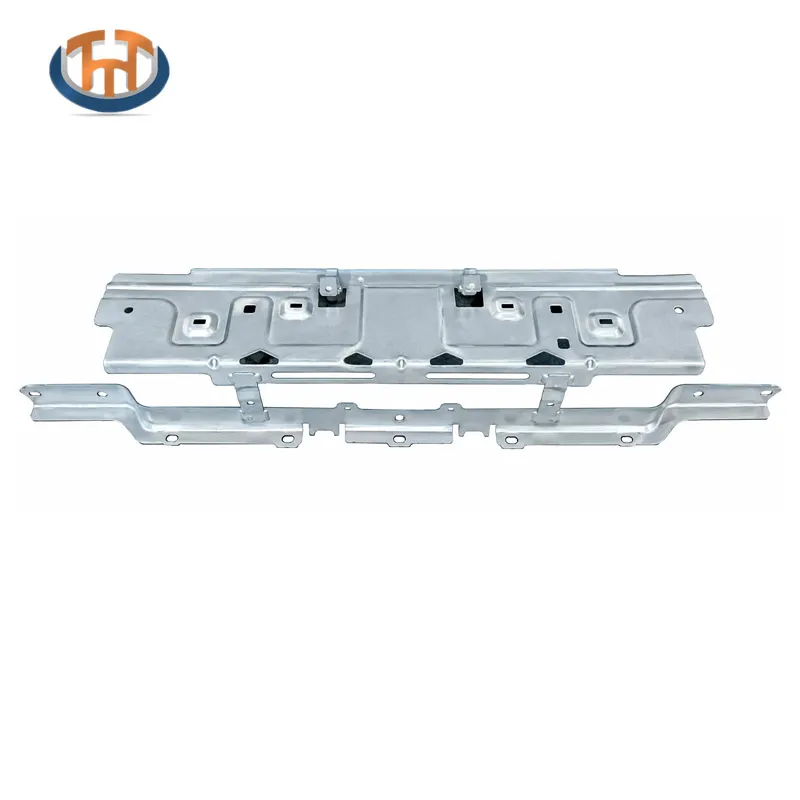
Aluminum
Aluminum alloys are also used for selected automotive components where weight reduction is a priority.
Compared with conventional steel, aluminum has different forming characteristics and may require specific considerations for springback, surface protection, forming conditions, and die design.
How Automotive Stamping Parts Are Manufactured
The manufacturing process for automotive stamping parts typically begins with component engineering and process development.
A typical workflow may include the following stages.
1. Part Design and Engineering Analysis
The component drawing is reviewed to understand its geometry, material, thickness, tolerances, forming requirements, and functional surfaces.
At this stage, engineers evaluate whether the part can be manufactured reliably using the proposed stamping process.
2. Process Planning
The manufacturing sequence is developed based on the geometry and production requirements.
Depending on the component, the process may include blanking, forming, drawing, trimming, piercing, bending, and flanging operations.
For complex components, several operations may be combined into a progressive, transfer, tandem, or other multi-stage production approach.
3. Die Design
The stamping die is designed around the selected manufacturing process.
Important considerations include:
- Die structure
- Forming sequence
- Material flow
- Punch and die clearance
- Forming radii
- Springback
- Part positioning
- Strip or blank handling
- Press requirements
- Maintenance access
Proper die design is essential for producing stable automotive stamping parts.
4. Die Manufacturing
After the design is completed, the tooling components are manufactured using precision machining and other manufacturing processes.
Depending on the die structure, production may involve:
- CNC machining
- Wire EDM
- Milling
- Grinding
- Drilling
- Surface treatment
- Die assembly
The accuracy of the manufactured die directly affects the dimensional performance of the finished stamped component.
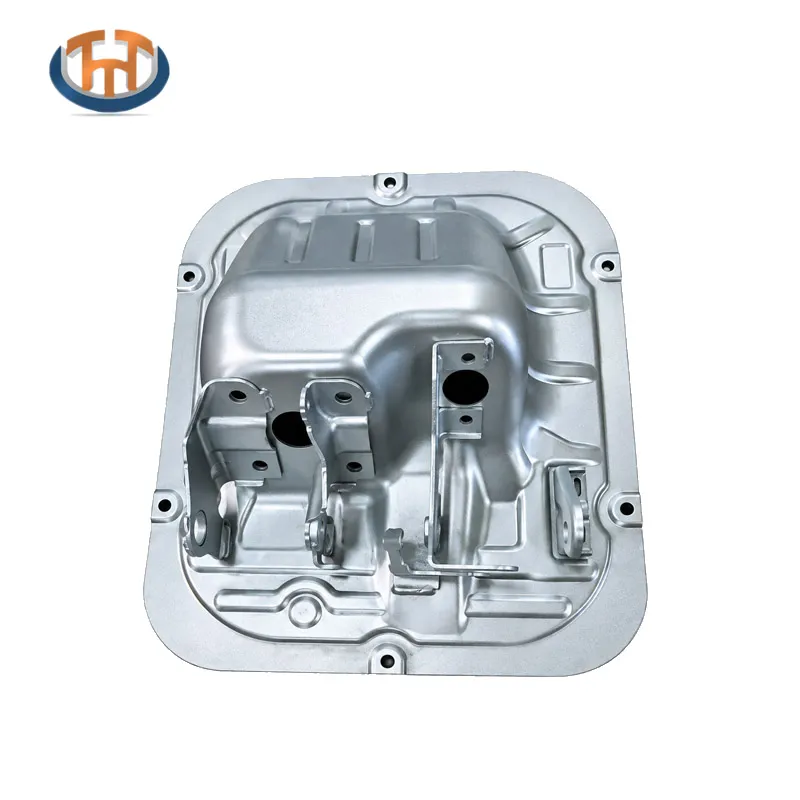
5. Die Assembly and Tryout
After machining, the die components are assembled and tested.
During tryout, sample parts are produced and inspected for:
- Dimensions
- Forming quality
- Surface condition
- Burrs
- Cracks
- Wrinkles
- Springback
- Hole position
- Part deformation
If problems are identified, the tooling can be adjusted and tested again.
6. Final Validation and Production
Once the stamped parts meet the required specifications, the tooling can proceed toward final validation and production.
For high-volume automotive manufacturing, production stability is particularly important because even a small dimensional variation can affect downstream assembly.
Automotive Stamping Dies for Structural Components
The production of structural automotive stamping parts often requires specialized tooling because these components may combine complex geometry with demanding strength and dimensional requirements.
For example, structural components may include multiple bends, reinforcement features, holes, flanges, and formed surfaces within one component.
The die therefore needs to provide controlled material flow while maintaining dimensional consistency.
Depending on the component and production requirements, manufacturers may select different tooling concepts, including progressive dies, transfer dies, tandem dies, or other dedicated stamping tools.
The selection should consider:
- Part geometry
- Material type
- Material thickness
- Production volume
- Number of forming operations
- Press capacity
- Automation requirements
- Dimensional requirements
A properly engineered die can help reduce forming problems, improve repeatability, and support efficient mass production.
Quality Requirements for Automotive Stamped Parts
Quality requirements vary according to the component and its function within the vehicle.
Typical inspection areas include dimensional accuracy, hole position, surface condition, forming shape, burr control, and assembly compatibility.
For structural automotive stamping parts, dimensional accuracy is particularly important because the components may need to interface with multiple parts during body or chassis assembly.
Common quality concerns include:
Dimensional Accuracy
Critical dimensions and tolerances must remain within the specified range.
Hole and Feature Position
Pierced holes, slots, mounting points, and other features must be accurately positioned to support downstream assembly.
Surface Quality
Visible or functional surfaces should be free from unacceptable scratches, dents, cracks, or forming marks.
Forming Quality
The component should have the required shape without excessive wrinkling, cracking, or deformation.
Repeatability
Production tooling should be capable of producing consistent parts throughout the manufacturing cycle.
Applications in Vehicle Body and Chassis Systems
Automotive stamping parts are used throughout different vehicle systems.
In body structures, stamped components can contribute to:
- Structural reinforcement
- Load distribution
- Body rigidity
- Panel support
- Joining and assembly
In chassis systems, stamped components may be used for:
- Brackets
- Supports
- Reinforcements
- Cross members
- Mounting structures
With the growth of electric vehicles, stamping technology is also being applied to components associated with battery systems, lightweight structures, and other vehicle architectures.
This development creates additional requirements for material selection, tooling design, dimensional control, and production efficiency.
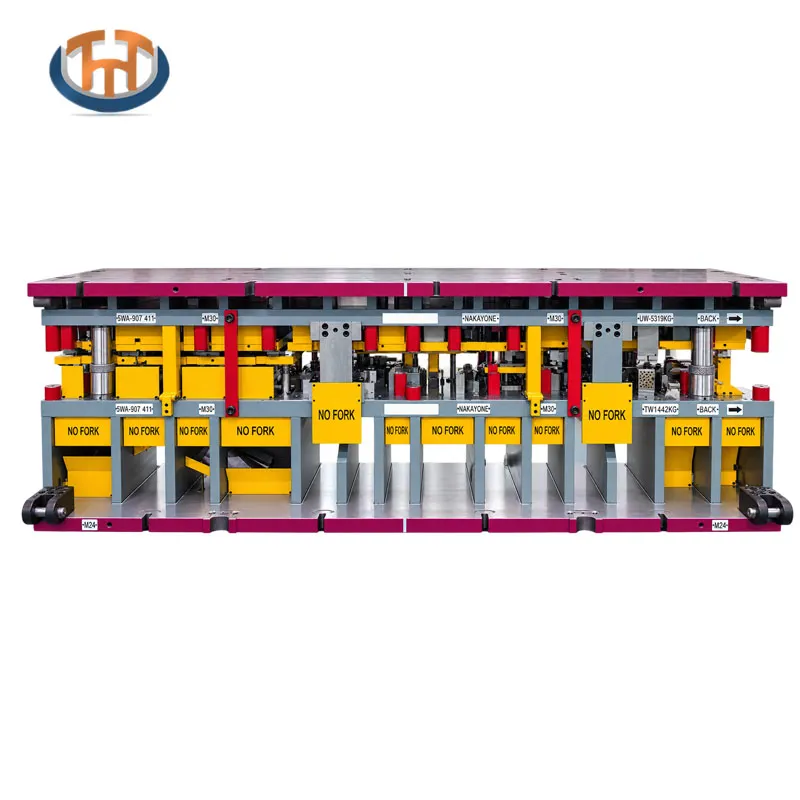
How the Right Stamping Die Supports Automotive Part Quality
The quality of an automotive stamping part cannot be separated from the tooling used to manufacture it.
A well-designed stamping die should account for the material behavior, component geometry, forming sequence, press conditions, and required production volume.
For high-strength automotive components, the tooling may also need to address springback, material flow, forming limits, and increased forming loads.
This is why selecting experienced stamping tools and dies engineering and manufacturing capabilities is important when developing automotive components for production.
From initial process planning and die design through machining, assembly, tryout, correction, and final validation, each stage can influence the final performance of the stamped component.
Conclusion
Automotive stamping parts are essential components in modern vehicle manufacturing. They are used in body structures, chassis systems, brackets, reinforcements, and many other automotive assemblies.
As vehicles become lighter, safer, and more complex, automotive stamping increasingly requires advanced materials, precise process planning, accurate tooling, and reliable quality control.
For manufacturers developing structural and functional sheet metal components, the right combination of material, stamping process, and die design can help achieve stable production and consistent part quality.
HONGXING, a tooling manufacturer within TTM GROUP, focuses on the development and manufacturing of automotive stamping dies for a wide range of vehicle components. Its tooling capabilities cover die engineering, manufacturing, assembly, tryout, modification, and production validation for automotive stamping applications.
For automotive manufacturers and Tier 1 suppliers looking for reliable tooling solutions, choosing the appropriate automotive stamping dies and stamping tools and dies is an important step toward achieving consistent, production-ready automotive stamping parts.