

An automotive battery bracket is a structural metal component designed to hold, locate, support, or reinforce a vehicle battery and its surrounding assembly. Although the part is usually much smaller than major body panels or battery enclosures, its dimensional accuracy and structural performance can have an important influence on vehicle assembly and battery stability.
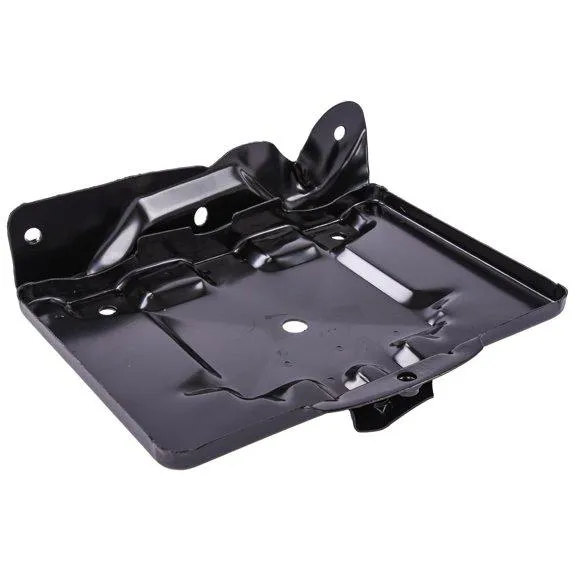
Battery brackets are commonly manufactured from stamped sheet metal because stamping can produce complex shapes with mounting holes, flanges, ribs, bends, and locating features in a repeatable and cost-effective way. Depending on the vehicle architecture, a bracket may be used with a conventional 12V battery, auxiliary battery, hybrid battery system, or components associated with an electric vehicle battery system.
The exact design varies according to the vehicle platform and installation position. Some brackets are relatively simple flat or bent components, while others combine multiple forming features to create a rigid three-dimensional structure.
For automotive manufacturers and Tier 1 suppliers, the challenge is not simply producing a metal bracket. The component must meet requirements for strength, dimensional accuracy, corrosion resistance, assembly compatibility, repeatability, and production efficiency.
Main Functions of a Battery Bracket
The primary purpose of an automotive battery bracket is to keep the battery or battery-related component securely positioned during vehicle operation.
Vehicles experience continuous vibration, acceleration, braking, road impacts, and temperature changes. A properly designed bracket helps prevent unwanted movement and maintains the required relationship between the battery and surrounding components.
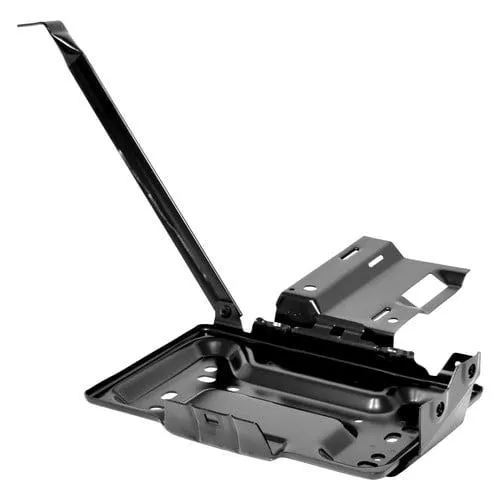
Typical functions include:
1. Battery Positioning
A bracket establishes a defined mounting position for the battery. Correct positioning is important because surrounding components, cables, connectors, covers, and other mounting structures must fit within their designed locations.
2. Mechanical Support
The bracket transfers loads from the battery or attached component into the vehicle structure. Formed flanges, ribs, embossments, and folded sections can increase stiffness without requiring a very thick sheet.
3. Vibration Resistance
A vehicle battery is exposed to vibration throughout its service life. The bracket therefore needs sufficient rigidity and fatigue resistance to maintain its mounting performance.
4. Assembly Location
Mounting holes, slots, tabs, and locating features can help operators or automated equipment position the component accurately during assembly.
5. Structural Reinforcement
In some applications, the bracket also acts as a reinforcement component. Its geometry can increase local stiffness around mounting points or load-bearing areas.
For EV and advanced vehicle structures, battery-related sheet metal components can also contribute to broader structural requirements. Engineering studies of battery tray systems, for example, consider stiffness, strength, impact protection, sealing, and weight optimization together.
Typical Structure of an Automotive Battery Bracket
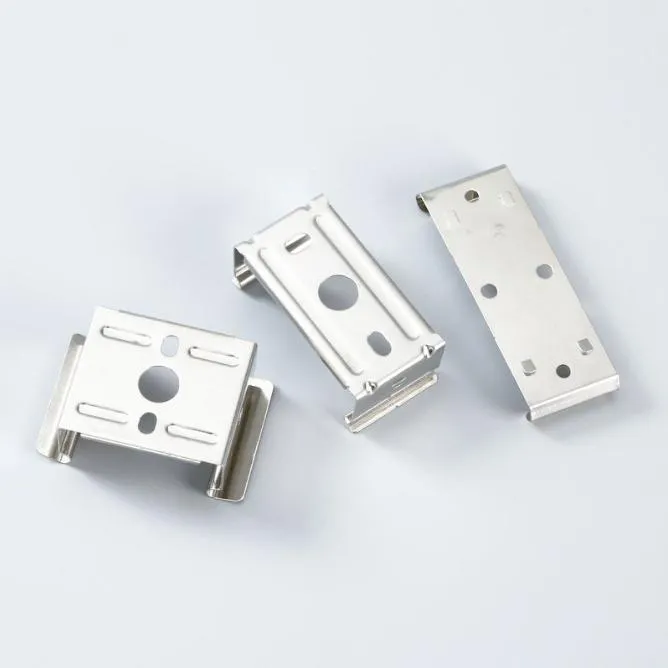
An automotive battery bracket rarely consists of a simple flat plate. Even relatively compact stamped components can contain several functional features.
Mounting Holes
Round holes are commonly used for bolts, studs, or other fasteners. Their diameter, position, and relationship to reference datums are important for assembly accuracy.
Elongated Slots
Slots can provide adjustment during assembly and compensate for tolerance accumulation between components. Their length and orientation depend on the mounting requirements.
Flanges
Bent flanges increase structural rigidity and can create vertical or horizontal mounting surfaces.
Reinforcing Ribs
Embossed or formed ribs increase section stiffness while allowing manufacturers to control material usage. A properly designed rib can improve rigidity without simply increasing sheet thickness.
Locating Tabs
Small tabs or formed features can assist component positioning and prevent incorrect installation.
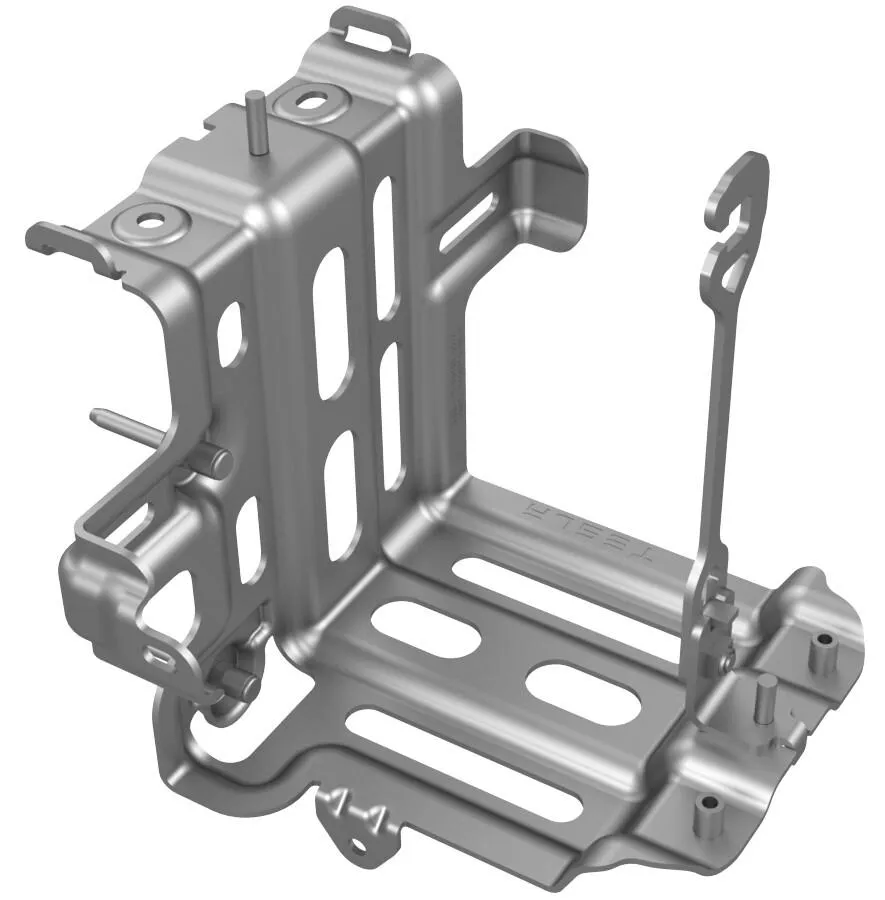
Formed Corners
Three-dimensional corners allow a flat sheet to become a rigid structural component. The forming radius must be considered carefully because excessive deformation can result in cracking or dimensional instability.
These features also influence the design of the stamping die. A part containing several holes, bends, embossments, and forming areas may require multiple forming operations or a more sophisticated die structure.
Materials Used for Automotive Battery Brackets
Material selection depends on the required strength, weight, corrosion resistance, forming characteristics, cost, and installation environment.
Common choices include:
- Carbon steel
- High-strength steel
- HSLA steel
- Galvanized steel
- Stainless steel
- Aluminum alloys
Steel remains widely used for structural automotive brackets because it provides a useful balance between strength, formability, availability, and manufacturing cost. For certain battery-related applications, high-strength steel can help achieve structural requirements while controlling component weight.
For example, advanced battery structures may use different grades of cold-formed steel according to the load and forming requirements of individual components.
Material selection should therefore be considered together with the forming process. A material with higher strength may provide excellent mechanical performance, but it can also increase forming forces and create additional challenges for die design.
How Is an Automotive Battery Bracket Manufactured?
The manufacturing process usually begins with engineering data and progresses through material preparation, stamping, forming, inspection, and surface treatment.
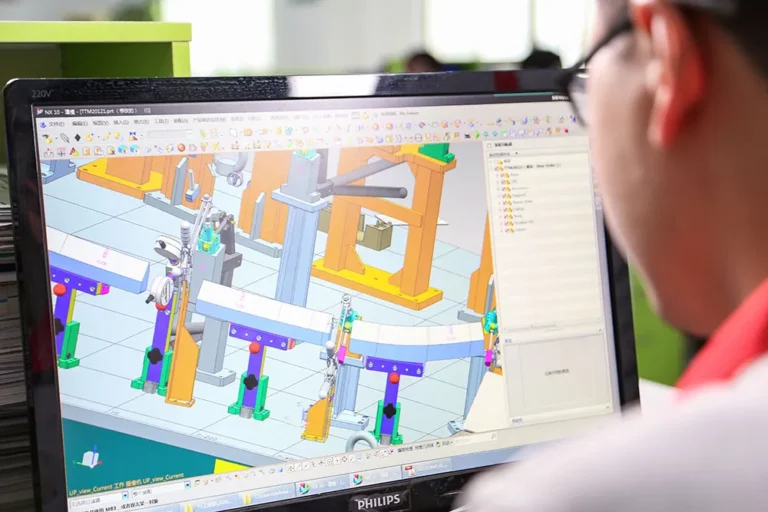
Step 1: Product Design and DFM Review
Before tooling begins, engineers review the 3D model and 2D drawing.
Important factors include:
- Material grade
- Sheet thickness
- Part dimensions
- Hole locations
- Bend radii
- Forming depth
- Tolerance requirements
- Datum structure
- Press capacity
- Production volume
The objective is to ensure that the component can be manufactured consistently rather than simply creating a shape that looks correct in CAD.
Step 2: Die Design
The stamping die is developed according to the geometry and production requirements.
Depending on the component, manufacturers may consider:
For higher-volume small and medium-size brackets, progressive tooling can combine multiple operations within a continuous production sequence. For larger or more complex automotive components, several dies or forming stations may be used.
This is where the relationship between the component and the tooling becomes particularly important. A well-designed automotive battery bracket requires tooling that controls material flow, forming position, hole location, and final geometry throughout production.
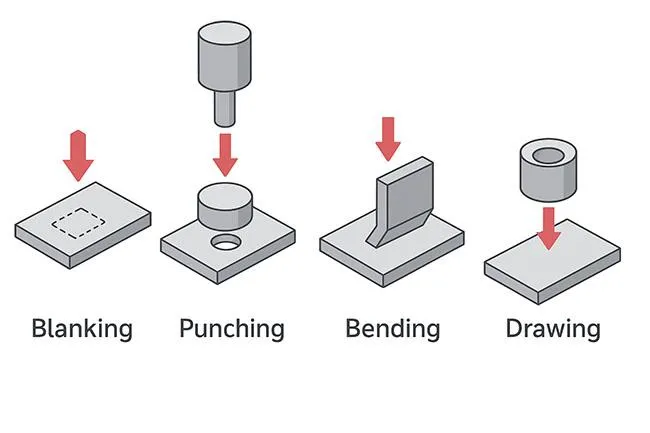
Step 3: Blanking and Piercing
The sheet is cut to the required blank shape. Mounting holes, slots, and other openings may be pierced during this stage or incorporated into subsequent operations.
Hole position is especially important because the holes determine how the finished component connects with surrounding parts.
Step 4: Bending and Forming
The blank is progressively transformed into its final three-dimensional shape.
Depending on the design, operations can include:
- Bending
- Flanging
- Embossing
- Drawing
- Curling
- Rib forming
- Hole piercing
- Trimming
The sequence must be carefully planned to prevent interference and excessive deformation.
Step 5: Tryout and Die Adjustment
After the tooling is manufactured, stamping trials are performed.
Engineers inspect the first parts and identify problems such as:
- Springback
- Wrinkles
- Cracks
- Excessive thinning
- Hole position deviation
- Forming distortion
- Inconsistent dimensions
The die can then be adjusted before production validation.
Step 6: Surface Treatment
Depending on the application, the finished part may receive a protective surface treatment such as coating, painting, plating, or other corrosion-protection processes.
This is particularly important for components exposed to moisture, road contaminants, temperature changes, or other demanding environmental conditions.
Why Dimensional Accuracy Matters
Dimensional control is one of the most important considerations when manufacturing an automotive battery bracket.
A component can have the correct general shape but still fail during assembly if one mounting hole, flange, or locating feature is outside its required tolerance.
Typical inspection methods may include:
- CMM inspection
- Fixture inspection
- Gauge inspection
- Optical measurement
- 3D scanning
- Dimensional inspection of critical holes
- Visual inspection
Critical dimensions should be connected to functional datums rather than measured randomly.
For example, if a bracket has three mounting holes, the distance between those holes may be more important than the overall length of the component because those holes determine how the bracket interfaces with the vehicle structure.
Common Manufacturing Challenges
Several problems can affect stamped battery brackets.
Springback
After forming, the sheet may partially return toward its original shape. This is particularly important when high-strength materials are used.
Cracking
Small bend radii, excessive forming depth, unsuitable material orientation, or excessive deformation can contribute to cracking.
Hole Deformation
Pierced holes can become distorted during subsequent forming operations if the process sequence is not properly designed.
Dimensional Variation
Variation in material properties, tooling condition, press parameters, and forming behavior can influence final dimensions.
Surface Damage
Scratches, dents, or forming marks may occur during stamping and handling. The acceptable level depends on the location and application of the component.
A robust tooling strategy addresses these issues before mass production rather than relying entirely on downstream inspection.
The Role of Stamping Dies in Battery Bracket Production
The stamping die is one of the most important elements in the manufacturing process.
A die must not only reproduce the overall shape of the component. It must also maintain the relationship between holes, bends, flanges, locating features, and functional surfaces.
For an automotive battery bracket, die design may need to consider:
- Material flow
- Forming sequence
- Punch and die clearance
- Bend compensation
- Springback
- Tool strength
- Part removal
- Scrap management
- Production cycle time
- Dimensional repeatability
The correct tooling approach depends heavily on part geometry and production volume. A simple bracket may require only a small number of operations, while a more complicated component may require several forming and piercing stages.
Battery Brackets for New Energy Vehicles
The growth of electric and hybrid vehicles has created additional requirements for battery-related components.
Large battery systems involve substantial structural and packaging requirements. Battery trays, enclosures, brackets, reinforcements, and mounting components must work together to provide the required mechanical performance.
Modern battery structures increasingly focus on balancing strength, weight, packaging efficiency, manufacturability, and crash performance. Research into advanced steel battery structures demonstrates how stamped components can be engineered with different steel grades and geometries to achieve stiffness and strength while controlling weight.
This trend creates opportunities for stamping manufacturers with experience in complex forming and high-strength materials.
Choosing a Manufacturer for Automotive Battery Brackets
When selecting a supplier, automotive manufacturers and Tier 1 suppliers should look beyond basic stamping capability.
Important considerations include:
Engineering Capability
The supplier should be able to review drawings, evaluate forming feasibility, and identify potential manufacturing risks before tooling begins.
Die Manufacturing Capability
In-house or closely controlled die manufacturing can improve communication between product engineering and tooling teams.
Tryout Capability
Tool tryout is essential for verifying forming performance and correcting dimensional problems before production.
Inspection Capability
Dimensional inspection equipment and appropriate checking fixtures help verify critical features.
Production Experience
Experience with automotive structural brackets, reinforcements, and other stamped components can reduce development risks.
Quality Control
Consistent material control, process monitoring, inspection, and traceability are important for repeatable production.
HONGXING Automotive Stamping Die Manufacturing
As an automotive stamping die manufacturer, HONGXING focuses on tooling solutions for automotive sheet metal components, including brackets, reinforcements, structural parts, and other stamped applications.
The development of an automotive battery bracket requires coordination between part design, material selection, die engineering, machining, assembly, tryout, and dimensional validation.
HONGXING’s tooling workflow can support the development process from initial engineering review through die manufacturing, assembly, tryout, and production validation. This integrated approach helps ensure that the final stamping die is designed around both the component geometry and the production requirements.
For automotive suppliers developing new battery-related components, selecting the appropriate die structure at an early stage can help control manufacturing complexity, dimensional variation, and production cost.
Conclusion
An automotive battery bracket may be a relatively small sheet metal component, but its role in vehicle assembly and battery mounting makes dimensional accuracy and structural performance important.
From mounting holes and locating tabs to formed ribs and reinforcing flanges, every feature has a functional purpose. Material selection, stamping sequence, die design, forming control, and inspection all contribute to the quality of the finished part.
As automotive and electric vehicle structures continue to evolve, battery-related brackets are likely to require increasingly sophisticated combinations of strength, lightweight design, corrosion resistance, dimensional accuracy, and manufacturing efficiency.
For manufacturers developing these components, the right stamping die is fundamental to achieving stable production. A capable automotive stamping die manufacturer can help transform a complex sheet metal design into a repeatable, production-ready component.