
Product Overview
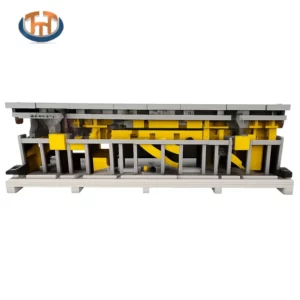
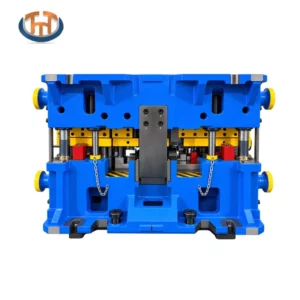
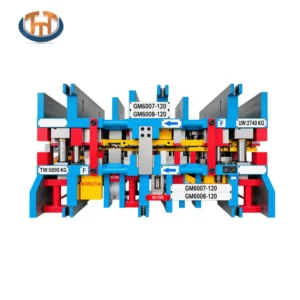
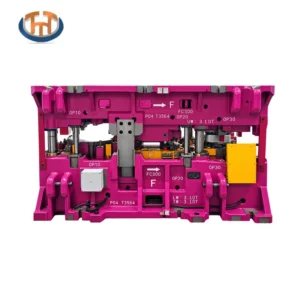
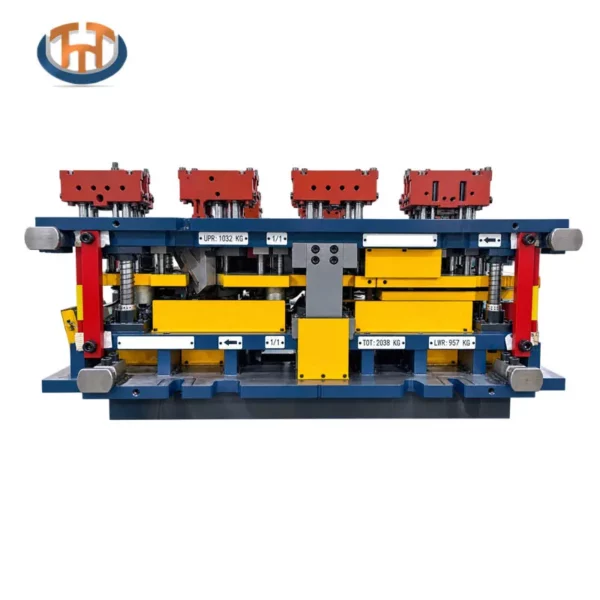
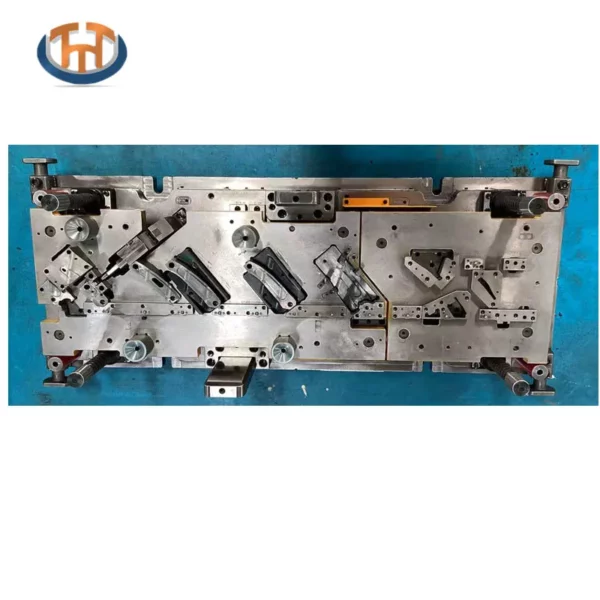
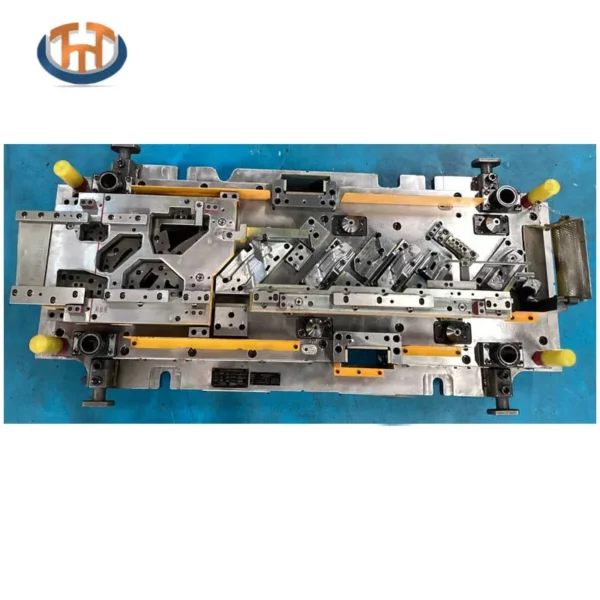
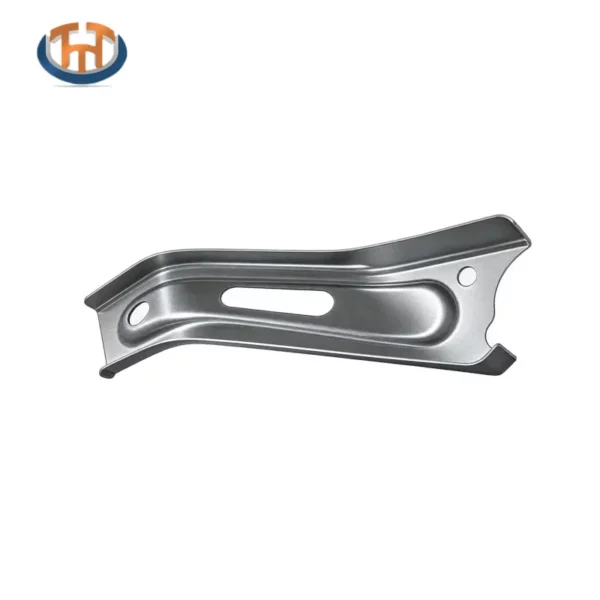
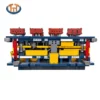
This H-Beam Reinforcement Bracket Stamping Die is a customized automotive tooling solution developed for manufacturing a formed sheet metal reinforcement bracket. The project features a dedicated die structure designed around the component’s shape, mounting openings, raised contours, and formed edges.
Manufactured by HONGXING Tool & Die, a member of TTM GROUP, this tooling project demonstrates our experience in developing automotive stamping dies for structural brackets and other application-specific sheet metal components.
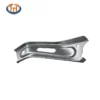
The stamped component features an elongated formed profile with a central slot, additional openings, raised sections, and shaped edges. These geometric features require coordinated control of forming depth, flange shape, hole positioning, and component consistency.
Rather than relying on a generic tooling configuration, the die must be developed according to the actual part geometry, material characteristics, press conditions, and customer quality requirements.
Product Specifications
| Item | Specification |
|---|---|
| Product Name | H-Beam Left Reinforcement Bracket Stamping Die |
| Product Type | Automotive Stamping Die |
| Part Application | H-Beam Reinforcement Bracket |
| Sheet Material | SPCC |
| Die Dimensions | 1750 × 858 × 642.6 mm |
| Upper Die Weight | 1,082 kg (nameplate value; verify against tooling label) |
| Lower Die Weight | 957 kg |
| Total Die Weight | 2,038 kg |
| Shut Height | 527.6 mm |
| Blank Size | 200 × 113.8 × 1.0 mm, as indicated on the tooling plate |
| Press Tonnage Marking | Pn (200T) / Pn (110T), as marked on the plate |
| Manufacturing Company | DongGuan HongXing Tool and Die Manufacturer Co., Ltd. |
Note: Specifications are transcribed from the supplied tooling identification plates and project photographs. Confirm the upper die weight, blank dimensions, and press tonnage configuration against the approved engineering documentation before final publication.
Engineering Considerations for Reinforcement Bracket Forming
1. Formed Profile and Contour Control
The reinforcement bracket has a non-flat, channel-like profile with raised contours and curved transitions. These features contribute to the component’s geometry and make forming accuracy an important consideration during tooling development.
The die design should account for the relationship between the forming surfaces, material flow, and final part geometry. Proper control of the forming process helps achieve consistent contours and reduce dimensional variation during production.
2. Slot and Hole Positioning
The stamped component includes an elongated central slot and additional openings. Their positions and dimensions may affect subsequent assembly and the component’s fit with adjoining parts.
Tooling development should therefore consider the specified hole locations, opening geometry, and their relationship to the component’s formed surfaces. Verification should follow the customer’s drawing and dimensional inspection requirements.
3. Flange Geometry and Edge Formation
The component incorporates shaped edges and formed flanges along its length. These features require appropriate tooling clearances and controlled forming conditions to maintain the intended profile.
During die tryout, engineers can evaluate flange consistency, edge condition, and potential interference according to the approved part geometry and production requirements.
4. SPCC Sheet Material Processing
The tooling identification plate specifies SPCC as the sheet material. Forming performance depends on the actual material thickness, mechanical properties, blank geometry, and selected stamping sequence.
The die should be validated using the specified material and production conditions. Material flow, surface condition, dimensional accuracy, and repeatability should be evaluated during the tryout process.
Tooling Manufacturing and Validation
HONGXING supports automotive stamping die projects through coordinated engineering and manufacturing activities. For a reinforcement bracket application, the main considerations include:
- Engineering review: Evaluate the part geometry, material specifications, forming requirements, and customer drawings.
- Die design and machining: Manufacture the required die components in accordance with the approved tooling design and dimensional requirements.
- Die assembly and fitting: Assemble and adjust the tooling to establish suitable alignment and forming conditions.
- Tryout and part verification: Produce trial samples and evaluate the formed profile, opening locations, flange geometry, and other specified characteristics.
- Final quality review: Confirm the tooling and sample parts against the applicable project acceptance criteria before delivery.
The actual process sequence and inspection scope depend on the approved project requirements.
Automotive Stamping Die Solutions from HONGXING
Different automotive brackets and reinforcement components require different tooling arrangements according to their geometry, material, production volume, and press conditions.
HONGXING develops customized stamping dies for automotive sheet metal applications, including structural components, formed brackets, reinforcement panels, and other application-specific parts.
Our engineering approach focuses on matching the tooling design to the component’s functional features and manufacturing requirements. This helps customers address forming complexity, dimensional consistency, and production feasibility during tooling development.
Explore our related capabilities:
- Automotive Stamping Die for Body Structural Components
- Automotive Body Stamping Die
- Automotive Structural Stamping Die
Request a Quote for a Custom Automotive Stamping Die
Looking for a tooling supplier for an automotive reinforcement bracket or a similar formed sheet metal component?
HONGXING can review your part drawings, material specifications, dimensional requirements, and production conditions to assess the tooling requirements for your project.
To support an engineering review, please provide available 2D drawings, 3D models, material and thickness specifications, target production volume, and press information.
Visit HONGXING at TTM GROUP to learn more about our automotive stamping die manufacturing capabilities and discuss your next tooling project.