


Metal stamping burrs are a common quality issue in the production of automotive sheet metal components and precision stamped parts. Excessive burrs can affect part assembly, dimensional accuracy, surface quality, and even the safety of downstream operations. For manufacturers using progressive dies, single-operation dies, or other automotive stamping dies, controlling burr formation is an important part of maintaining stable production quality.
So, why are metal stamping burrs sometimes too large? In most cases, the problem is related to stamping die clearance, cutting edge condition, material properties, die alignment, or press accuracy.
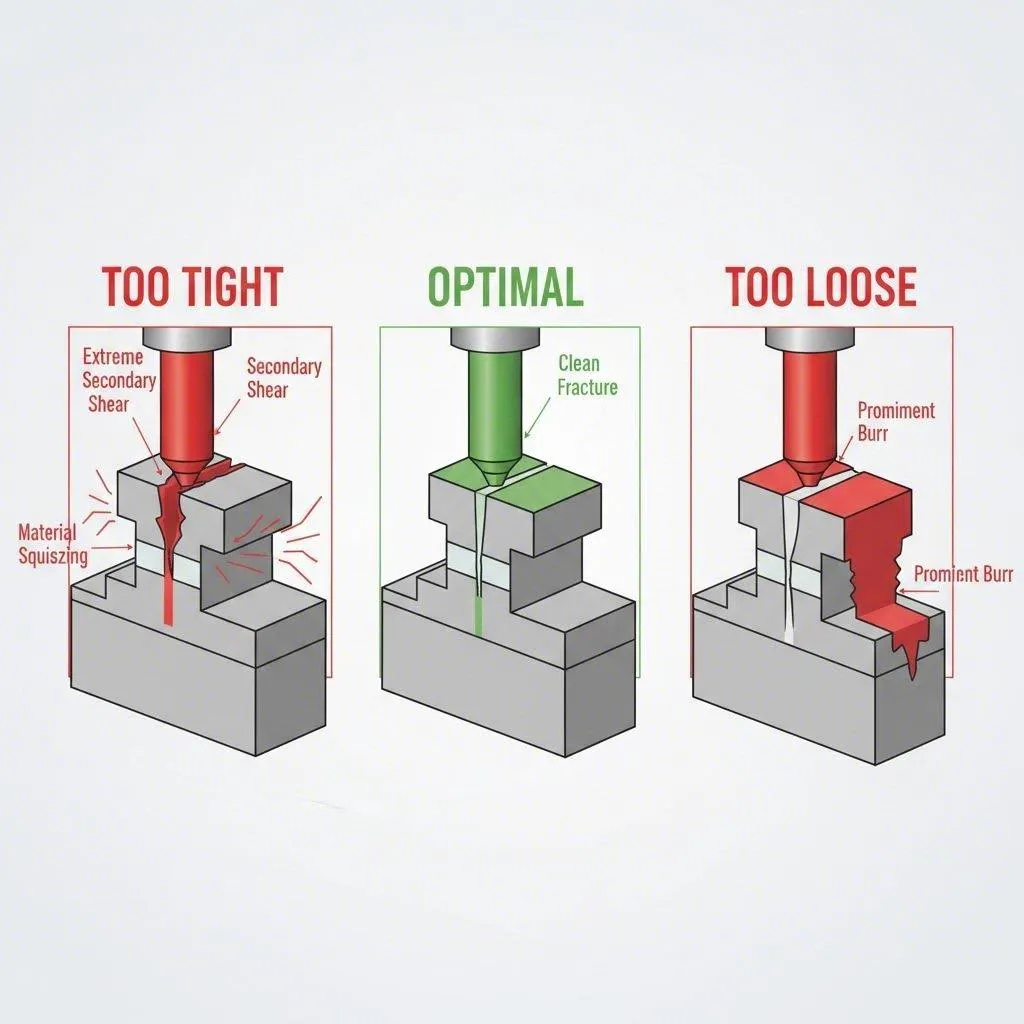
1. Improper Stamping Die Clearance
One of the most common causes of excessive metal stamping burrs is incorrect die clearance.
During the stamping process, the punch and die must maintain an appropriate clearance according to the material type and thickness. If the clearance is too large, the material is not cleanly sheared and the fractured area becomes larger. This increases the possibility of producing large burrs along the cut edge.
However, clearance that is too small is not necessarily better. Excessively small clearance can increase cutting resistance, accelerate cutting edge wear, and potentially cause chipping or other die damage.
For this reason, stamping die clearance should be carefully designed according to the material thickness, strength, and application requirements.
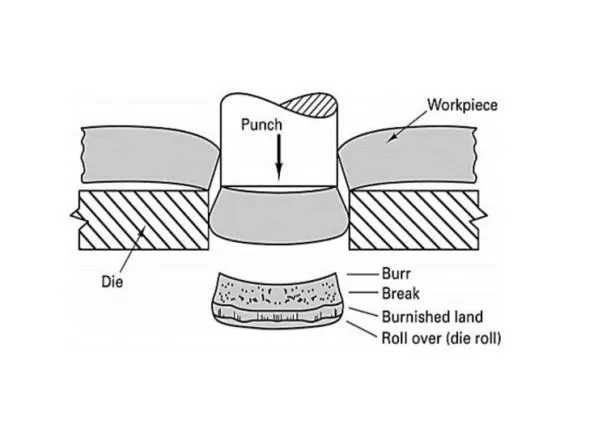
2. Worn Cutting Edges
Another important cause of large stamping burrs is cutting edge wear.
When a new punch and die are used, the cutting edges are normally sharp and can produce relatively clean shearing results. As production continues, repeated contact between the tooling and sheet metal gradually wears the cutting edges.
A typical symptom is that the burr is small at the beginning of production but gradually becomes larger after thousands or tens of thousands of strokes.
When excessive burrs appear after a certain production volume, manufacturers should inspect the punch and die cutting edges and determine whether sharpening or replacement is required.
3. Poor Punch and Die Alignment
Incorrect alignment between the punch and die can also create uneven metal stamping burrs.
If the punch is not correctly centered with the die opening, the clearance may become larger on one side and smaller on the opposite side. As a result, burr height may vary significantly around the same stamped component.
Possible causes include worn guide posts and guide bushings, incorrect insert positioning, poor die assembly, or movement of die components during production.
Checking punch-to-die alignment is therefore an important step when burrs appear only in specific areas of a stamped part.
4. Material Properties and Thickness Variation
The material itself can also influence stamping burr formation.
Different grades of steel, aluminum, stainless steel, and other sheet metals have different strength, hardness, ductility, and fracture characteristics. Material thickness variation can also change the actual working clearance during the cutting process.
If excessive burrs suddenly appear after changing to a new material coil, it is worth checking the material thickness, hardness, tensile strength, and other relevant material specifications before modifying the stamping die.
5. Local Cutting Edge Problems
Sometimes burrs are not excessive across the entire part but are concentrated around specific corners, narrow sections, holes, or complex contours.
In these situations, the problem may be related to local die geometry or localized cutting edge damage.
For example, a damaged cutting edge, an inappropriate corner radius, or insufficient local die support can cause excessive burrs in a specific area. Careful inspection of the affected section can help determine whether the problem is caused by the overall die clearance or by a local tooling condition.
6. Die Assembly and Rigidity
The rigidity and assembly accuracy of a stamping die can also affect burr quality.
During high-tonnage stamping, the die is subjected to significant forces. If the die structure, inserts, fasteners, or supporting components are not sufficiently rigid, small movements or deformation may occur during operation.
These changes can alter the actual clearance between the punch and die, resulting in inconsistent shearing and larger burrs.
For automotive stamping applications, proper die construction, accurate assembly, and sufficient structural rigidity are essential for maintaining stable production performance.
7. Press Accuracy and Operating Conditions
The stamping press should also be considered when investigating excessive burrs.
Slide parallelism, bottom dead center accuracy, press rigidity, shut height, and other machine conditions can influence the actual working relationship between the upper and lower dies.
If the same stamping die produces different burr conditions on different presses, the press itself may be contributing to the problem.
Therefore, burr troubleshooting should not focus only on the die. The complete system, including the material, stamping die, and press, should be evaluated.
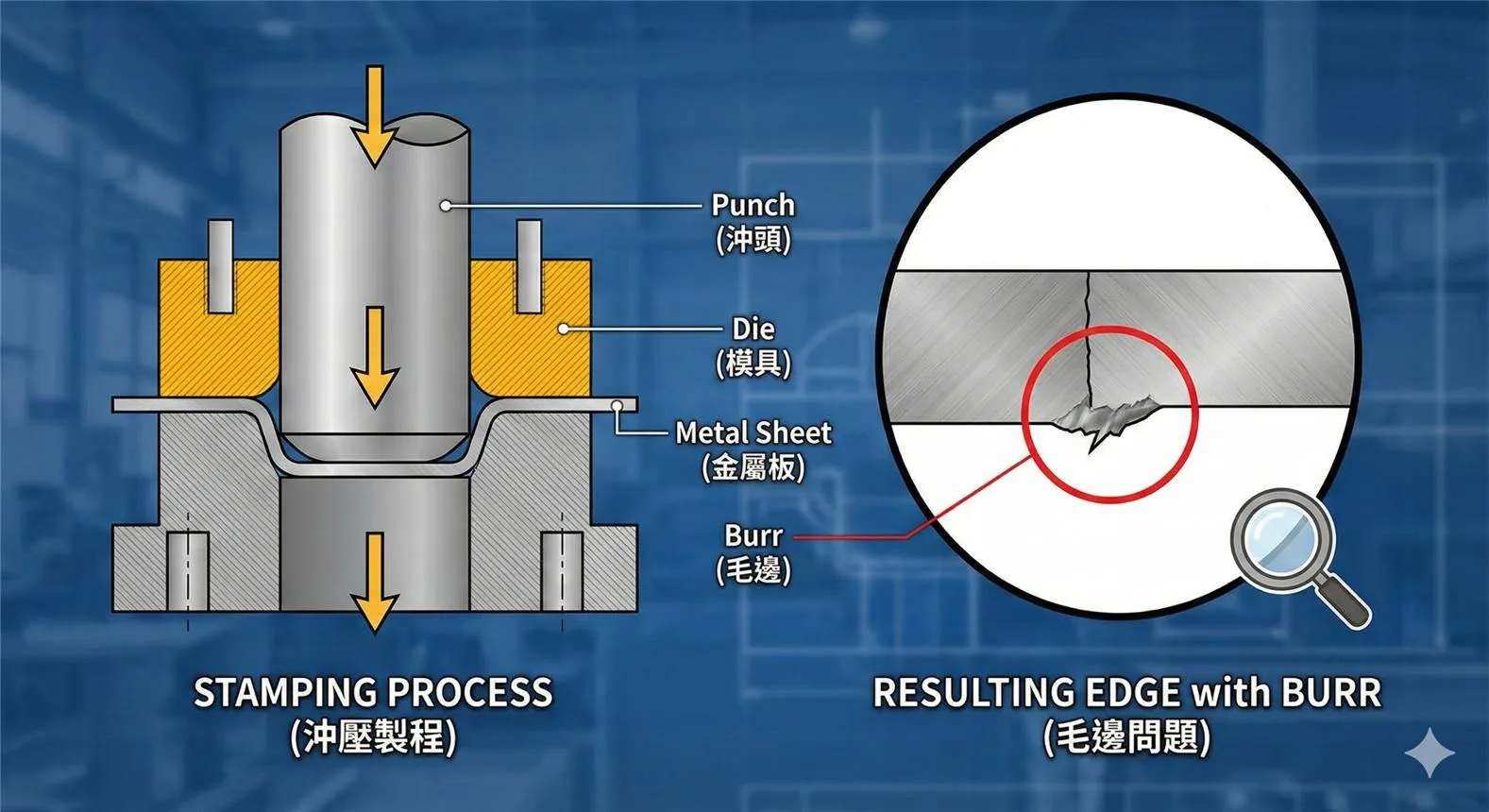
How to Reduce Metal Stamping Burrs
A systematic inspection process can help manufacturers quickly identify the root cause of excessive burrs.
The recommended inspection sequence is:
- Check material thickness and material specifications.
- Verify the stamping die clearance.
- Inspect punch and die cutting edges for wear.
- Check punch-to-die alignment.
- Inspect die parallelism and assembly accuracy.
- Check press accuracy and operating conditions.
- Repair, sharpen, or redesign the tooling if necessary.
Rather than simply reducing the die clearance, manufacturers should identify the actual cause of the burr problem. An incorrect clearance adjustment may temporarily improve one area while creating additional tooling wear or production problems elsewhere.
Conclusion
Large metal stamping burrs are usually a result of multiple factors rather than a single tooling problem. Stamping die clearance, cutting edge wear, punch and die alignment, material properties, die rigidity, and press accuracy can all influence the final edge quality of stamped components.
For automotive stamping parts and precision sheet metal components, effective burr control starts with correct die design and continues through accurate die assembly, regular cutting edge maintenance, material control, and stable press operation.
By establishing a systematic inspection and maintenance process, manufacturers can reduce excessive stamping burrs, improve part quality, extend die service life, and maintain more consistent production performance.