

Introduction
In automotive stamping production, die performance depends not only on forming accuracy and tooling strength but also on how easily critical components can be inspected, serviced, and replaced. A stamping die may perform reliably during initial production, yet become difficult to maintain if access to punches, inserts, guide components, sensors, and fastening points has not been properly considered during the design stage.
For automotive manufacturers and Tier 1 suppliers, automotive stamping die maintenance is an important part of long-term tooling performance. Poor maintenance access can increase service time, complicate troubleshooting, and extend production interruptions when wear or damage occurs.
A well-designed automotive stamping die should balance structural rigidity, forming performance, dimensional accuracy, and maintenance accessibility. By considering serviceability during tooling development, engineers can make routine inspections more practical and support more consistent production over the die’s service life.
1. Why Maintenance Access Matters in Automotive Stamping Dies
Automotive stamping dies often contain multiple interacting components, including punches, die inserts, guide systems, lifters, springs, wear plates, and fastening elements. These components may require periodic inspection, cleaning, adjustment, or replacement.
When critical areas are difficult to reach, even a relatively simple maintenance task can require additional disassembly. This may increase service time and create unnecessary handling risks.
Common maintenance challenges include:
- Restricted access to replaceable die inserts.
- Fasteners positioned behind surrounding tooling components.
- Limited visibility around wear surfaces and locating features.
- Difficult removal of punches or other serviceable components.
- Insufficient clearance for maintenance tools.
- Complicated reassembly and alignment procedures.
These issues are particularly important in high-volume automotive production, where tooling downtime can affect the wider manufacturing schedule.
Maintenance access should therefore be treated as an engineering requirement rather than an issue to address only after the die enters production.
2. Identify Serviceable Components During Die Design
The first step in improving stamping die serviceability is identifying which components may require regular inspection or replacement.
Depending on the tooling structure and production conditions, these may include:
- Punches and cutting inserts.
- Forming inserts and wear plates.
- Guide pins and guide bushes.
- Springs and nitrogen gas springs, where applicable.
- Locating components and mechanical stops.
- Sensors and associated mounting components.
- Fasteners and replaceable wear elements.
Not every component requires the same maintenance frequency. Engineers should evaluate component function, expected wear, accessibility, and the consequences of failure.
For example, a replaceable insert used in a frequently serviced area should ideally be removable without unnecessary disassembly of major die structures. At the same time, the mounting arrangement must maintain sufficient rigidity and repeatable positioning.
The objective is to establish a practical balance between ease of service and reliable tooling performance.
3. Design Practical Access for Inspection and Replacement
Effective stamping die maintenance access requires more than leaving open space around the tooling. Engineers need to consider the actual sequence of maintenance operations.
Fastener Accessibility
Fasteners should be positioned so that technicians can access them using suitable tools. Where practical, the design should avoid arrangements that require the removal of several unrelated components before a critical fastener can be reached.
Insert Removal
Replaceable punches and die inserts should have a defined removal and installation method. Depending on the application, this may involve extraction holes, dedicated lifting features, removable retainers, or other engineered arrangements.
Any removal feature must be compatible with the component’s strength and intended operating loads.
Inspection Visibility
Wear surfaces, locating areas, and critical interfaces should be positioned to allow practical inspection. Improved visibility helps technicians identify abnormal wear, damage, contamination, or loose components before these conditions lead to more serious problems.
Maintenance Tool Clearance
The die design should account for the space required by commonly used maintenance tools. A component may appear accessible in a three-dimensional model but remain difficult to service when surrounding structures limit tool movement.
Reviewing these conditions during the design stage can help avoid unnecessary maintenance difficulties after production launch.
4. Balance Serviceability With Die Rigidity and Precision
Improving maintenance access must not compromise the mechanical performance of the tooling.
Automotive stamping dies are designed to withstand repeated loading while maintaining the required relationship between working surfaces. Excessive material removal or poorly positioned access openings may reduce local stiffness or create stress concentrations.
Engineers should evaluate the following factors together:
- Structural rigidity of the upper and lower die assemblies.
- Support around critical inserts and working surfaces.
- Fastener strength and retention.
- Alignment of replaceable components.
- Access clearance for inspection and servicing.
- Repeatability after component replacement.
For precision automotive tooling, a replaceable component must return to its intended position after maintenance. Suitable locating features, controlled mating surfaces, and appropriate fastening arrangements can help maintain consistency.
Maintenance-friendly design should improve serviceability without introducing avoidable variation into the stamping process.
5. Consider Die Maintenance Access in Automated Production Lines
Maintenance accessibility becomes especially important when stamping dies operate in automated production environments.
Progressive dies and transfer dies may be integrated with automatic feeding systems, transfer mechanisms, sensors, and production monitoring equipment. A maintenance operation may therefore involve both the die itself and the surrounding press-line equipment.
For applications involving multiple sequential stamping operations, engineers can also evaluate automotive progressive die solutions alongside maintenance accessibility, component replacement requirements, and production volume.
During tooling development, engineers should consider:
- Access for scheduled inspection and cleaning.
- Clearance around sensors and electrical connections.
- Safe access to replaceable tooling components.
- Compatibility with die handling and lifting arrangements.
- Space required for die removal and installation.
- Coordination with press and automation maintenance procedures.
The required arrangements depend on the press configuration, tooling size, automation system, and site safety requirements.
For larger automotive stamping tools, maintenance planning should also account for lifting points, handling equipment, and approved procedures for removing heavy components.
A maintenance access review can help identify potential servicing constraints before the tooling is installed on the production line.
6. Use a Structured Die Maintenance Plan
Even a well-designed die requires systematic inspection and maintenance. A structured maintenance plan helps production and tooling teams identify wear trends, document repairs, and reduce the likelihood of unexpected failures.
A practical plan may include the following activities.
Before Production
- Confirm tooling assembly and fastening conditions.
- Inspect critical working surfaces and replaceable inserts.
- Verify locating components and guide systems.
- Check sensors and other applicable monitoring devices.
- Confirm that maintenance and handling procedures are available.
During Production
- Monitor changes in part quality and process stability.
- Investigate abnormal noise, vibration, or operating conditions.
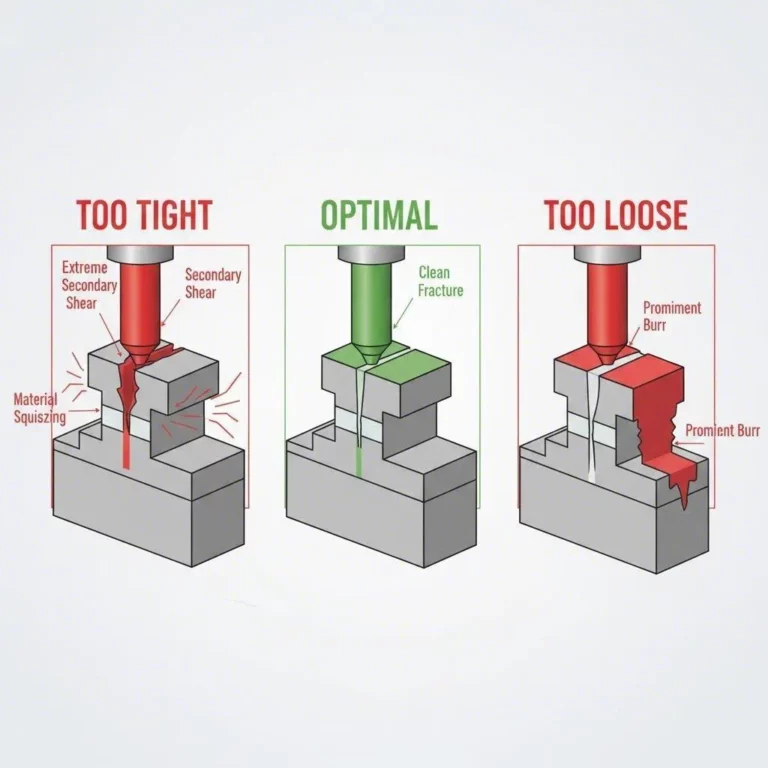
- Inspect tooling when burrs, dimensional variation, or surface defects indicate a potential problem.
- Record adjustments, repairs, and component replacements.
During Planned Maintenance
- Inspect wear components according to the maintenance schedule.
- Clean relevant tooling areas and remove accumulated contamination.
- Check critical interfaces, fasteners, and replaceable components.
- Document component condition and maintenance findings.
- Verify tooling alignment and functional performance after reassembly.
Inspection intervals should be established according to the tooling design, material being processed, production volume, operating conditions, and observed wear. A fixed interval should not replace engineering judgment or the manufacturer’s maintenance instructions.
7. Verify Serviceability During Die Tryout
Die tryout provides an opportunity to evaluate not only stamping quality but also practical maintenance requirements.
During automotive stamping die tryout, engineers can review whether critical components can be inspected, removed, replaced, and reinstalled using the intended procedures.
Useful verification points include:
- Accessibility of frequently serviced components.
- Time and steps required for routine maintenance tasks.
- Repeatability of insert positioning after replacement.
- Accessibility of fasteners and inspection areas.
- Compatibility with the intended maintenance tools.
- Availability of clear maintenance documentation.
If the original design creates unnecessary service difficulties, improvements may be easier to implement before the tooling enters regular production.
This review complements dimensional inspection and functional validation by addressing the long-term usability of the complete tooling system.
8. How a Tooling Manufacturer Can Support Better Maintenance Planning
A professional automotive stamping die manufacturer should consider serviceability throughout the engineering and manufacturing process.
During design development, engineers can identify serviceable components, review access requirements, and evaluate the relationship between maintenance features and structural performance.
During manufacturing and assembly, precision machining and controlled fitting help establish the geometry and interfaces required for reliable component replacement.
During tryout, the assembled tooling can be evaluated under actual operating conditions, while maintenance procedures can be reviewed for practicality.
HONGXING, a member of TTM Group, provides automotive stamping die engineering and manufacturing solutions for automotive structural components and other sheet metal applications. Its tooling capabilities include progressive dies, transfer dies, tandem dies, precision machining, die assembly, and tryout support.
For projects requiring long production runs or complex tooling structures, maintenance access can be included in the initial engineering discussion alongside component geometry, material specifications, press requirements, and production volume.
Learn more about our automotive manufacturing capabilities to understand how tooling engineering, machining, assembly, and validation support automotive production projects.
Conclusion
Automotive stamping die maintenance access is an important design consideration that can influence servicing efficiency, tooling availability, and long-term production reliability.
By identifying serviceable components early, designing practical access for inspection and replacement, preserving structural rigidity, and verifying maintenance procedures during tryout, engineers can create tooling that is easier to maintain without compromising dimensional accuracy or operating performance.
For automotive OEMs and Tier 1 suppliers, the most effective approach is to integrate maintenance planning into the complete tooling development process rather than treating it as a separate activity after production begins.
HONGXING supports automotive tooling projects from engineering and precision machining through die assembly and tryout. Contact the team at ttm@ttmgauge.com to discuss your automotive stamping die requirements.
Frequently Asked Questions
Why is maintenance access important in automotive stamping die design?
Good maintenance access makes it easier to inspect, clean, adjust, and replace serviceable components. It can reduce unnecessary disassembly and help maintenance teams restore tooling to production more efficiently.
Which stamping die components typically require maintenance?
Depending on the die structure and operating conditions, serviceable components may include punches, cutting inserts, wear plates, guide components, springs, fasteners, and sensors.
Should maintenance access be considered before die manufacturing?
Yes. Reviewing maintenance access during the design stage helps identify restricted areas, difficult removal procedures, and potential conflicts with tooling rigidity before manufacturing is completed.
How can die tryout help verify maintenance accessibility?
During tryout, engineers can evaluate access to critical components, review removal and installation procedures, and confirm that replaceable components can be reassembled with the required positioning accuracy.